

You will find highlights on this key topic at the DLG Spotlight Soil Health (Hall 24, Stand A15).
Here you can gain an insight into the stand area that deals with the topic of "Soil Biodiversity".
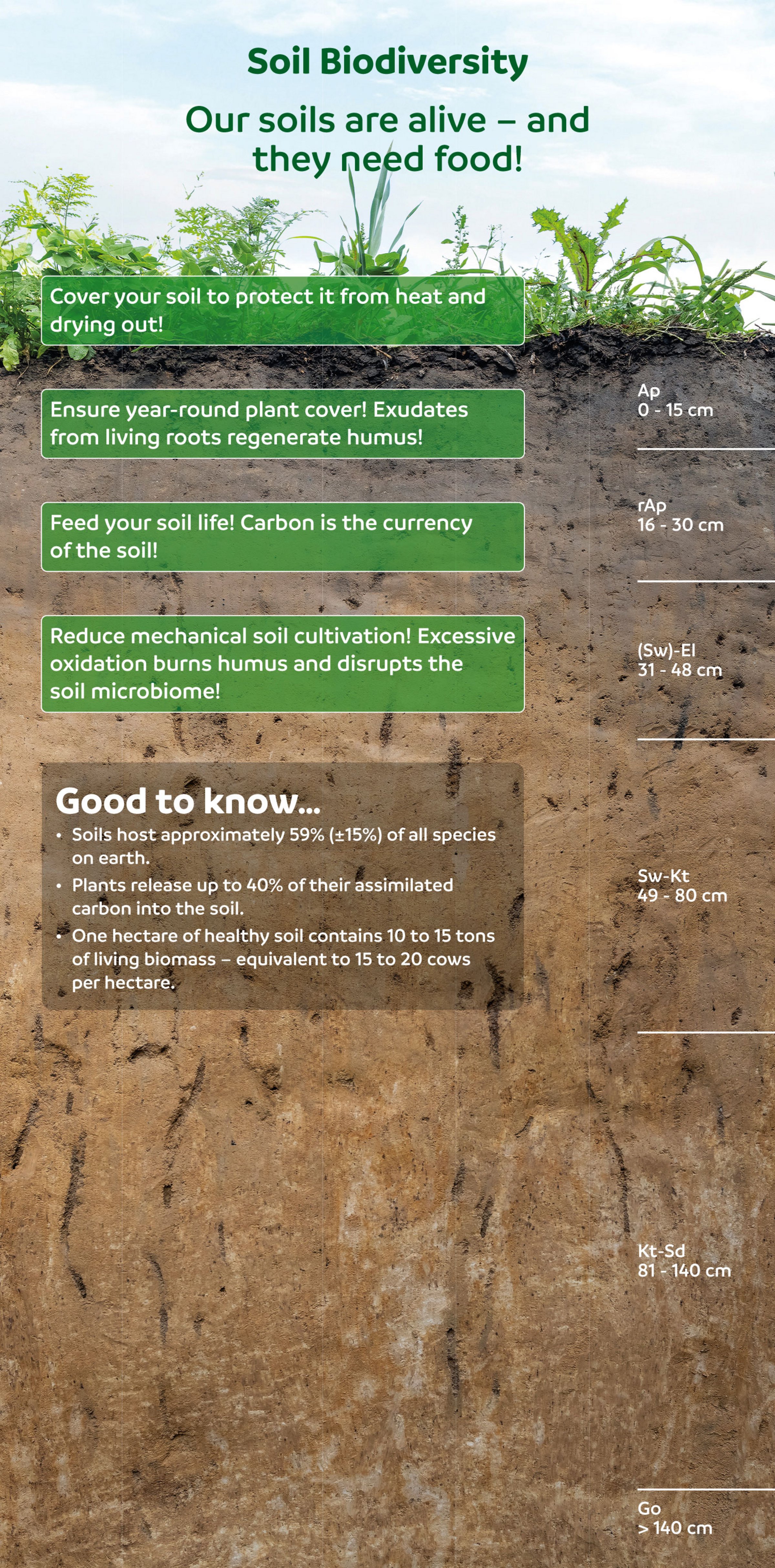
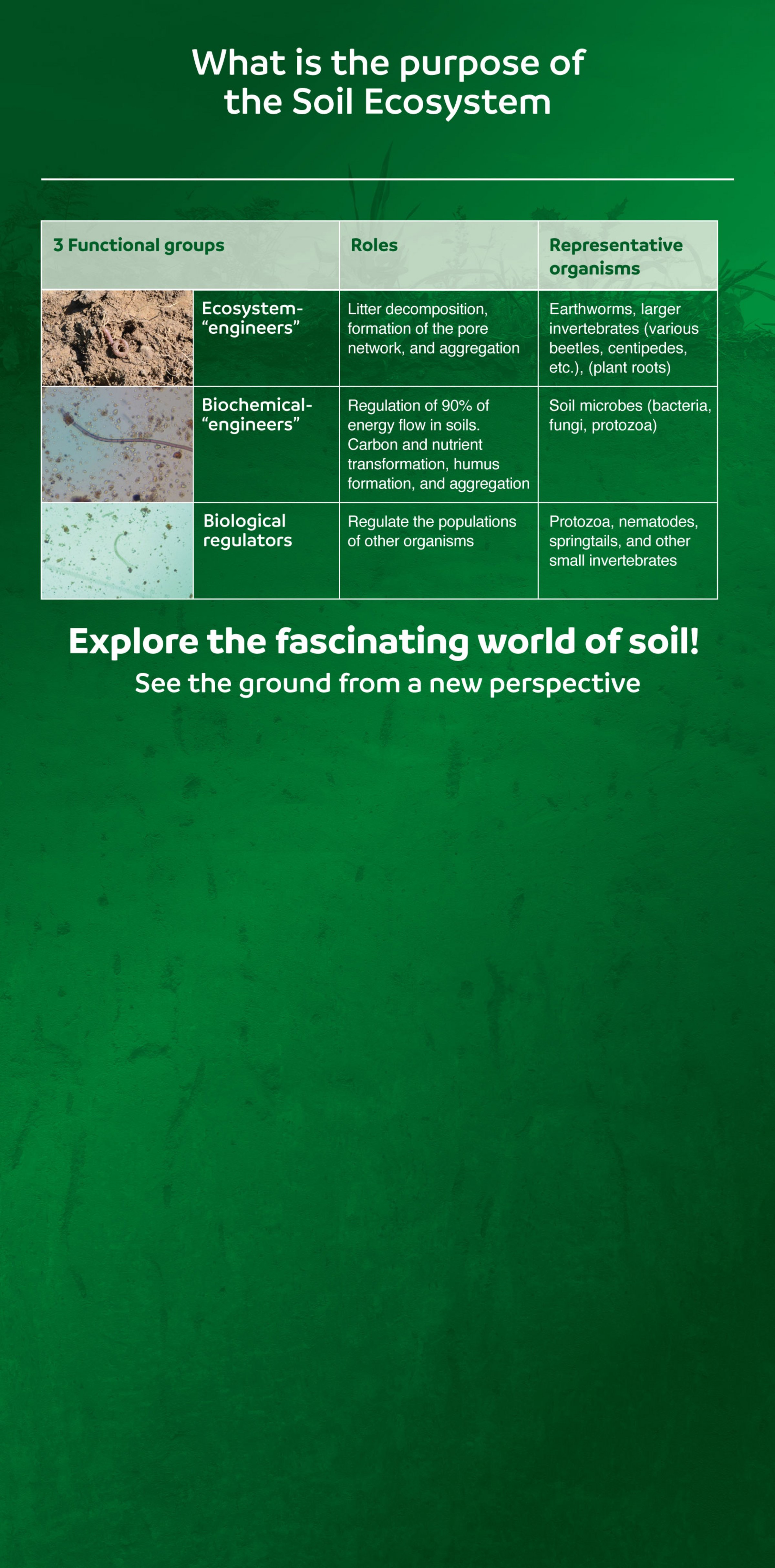
Soil Biodiversity – Our Soils Are Alive!
Provided by: South Westphalia University of Applied Sciences, Department of Agriculture , Soest
Soil Biodiversity in numbers:
Table 1: How many (different) organisms live in one square meter of soil? (according to Weil und Brady 2017) à Note: 1015 = 1 quadrillion, 1012 = 1 trillion, 109 = 1 billion, 106 = 1 million
Organisms | Abundance [number/m2] | Biomass [g/m2] | Biodiversity [taxa/g or m2] |
Bacteria and Archaea | 1014 – 1015 | 40 – 500 | 1 – 9000 g-1 |
Actinomycetes | 1012 – 1013 | 40 – 500 | n. a. |
Fungi | 106 m – 108 m | 100 – 1500 | 1 – 300 g-1 |
Algae | 109 – 1010 | 1 – 50 | n. a. |
Protozoa | 107 – 1011 | 2 – 30 | 1 – 5000 g-1 |
Nematodes | 105 – 107 | 1 – 30 | 10 – 1000 m-2 |
Mites | 103 – 106 | 0,2 – 5 | 100 – 500 m-2 |
Springtails | 103 – 106 | 0,2 – 5 | 10 – 100 m-2 |
Earthworms | 10 – 103 | 10 – 400 | 2 – 10 m-2 |
Other Fauna | 102 – 104 | 1 - 10 | 30 – 3000 m-2 |
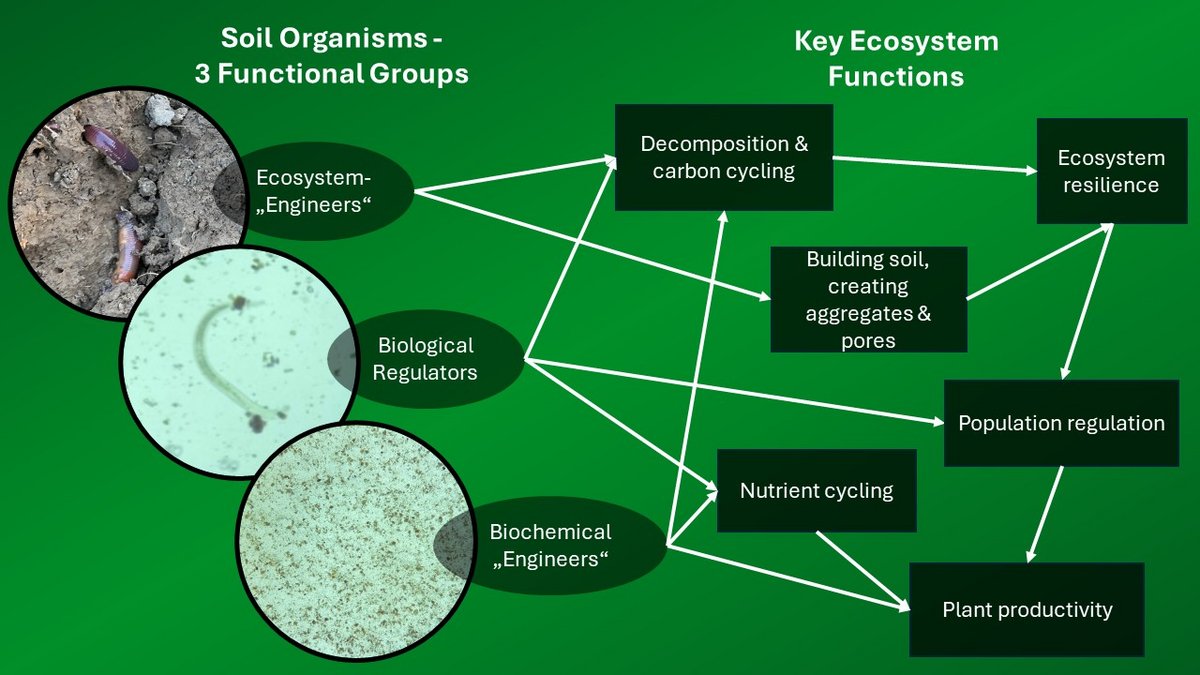
What does Soil Biology do? - A simplified overview of functional groups of soil organisms:
Biodiversity in soils is complex. Many factors interact with each other and have received little attention in practice so far. Examples of selected influencing factors and interrelationships are illustrated below
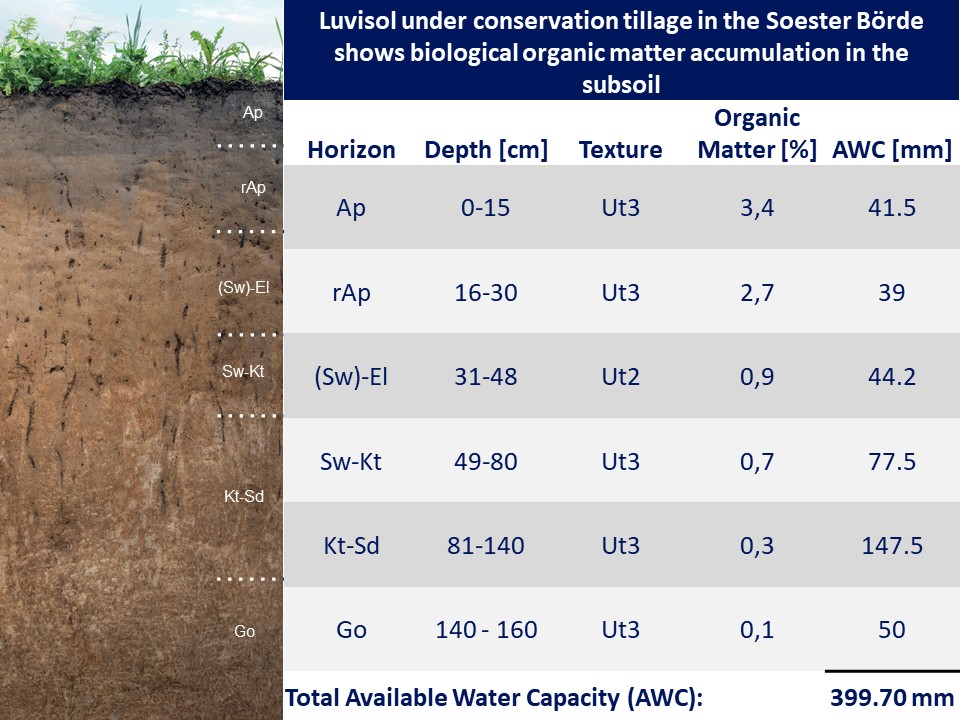
Organic matter:
- Soils are the second-largest carbon reservoir on Earth behind the oceans, storing 3,100 GtC. 60% of this is in the form of organic matter, including significant amounts in permafrost soils. The remaining 40% is inorganic carbon in the form of carbonates (Friedlingstein et al. 2015, Weil and Brady 2017).
- The A-horizon, also known as the topsoil, typically contains the majority of the organic carbon.
- Reduced tillage leads to a vertical humus gradient due to surface accumulation, promoting aggregation and water infiltration, which helps prevent erosion (Priori et al. 2024, Wulanningyas et al. 2021).
- Nevertheless, carbon is also incorporated into the subsoil through bioturbation and root penetration.
- Plants release up to 40% of their photosynthetically assimilated carbon as root exudates into the rhizosphere, feeding microbes in exchange for nutrients (Jones 2008, Brüggemann et al. 2011).
- Carbon from living roots is 2 to 13 times more effective in building humus than particulate organic matter (Sokol et al. 2018). This is the key insight of a new theory on organic matter cycling in soils, which states that it is not the resistant organic compounds with a wide C/N ratio that build organic matter in the long term, but predominantly easily degradable compounds, such as sugars, with a narrow C/N ratio, which are metabolized by microbes.
- Carbon from roots is transformed into organic matter at a rate of 46%, whereas the rate for carbon from the above-ground shoot is only 8% (Jackson et al. 2017)
- 50% of organic carbon is of microbial origin – microbes metabolize root exudates, and their necromass is being stabilized on mineral surfaces (Liang et al. 2019) >Materials with a C/N ratio around 10:1 are “microbial food” and the most important pathway for organic matter formation!
- Stabilization of organic carbon compounds in the soil can occur through three different mechanisms. However, none of them is truly permanent. Organic matter content is a dynamic equilibrium between carbon input and decomposition – strongly influenced by land management!
Goal: Increase organic carbon input via living roots – reduce decomposition through priming (e.g., tillage, excessive N-fertilization, overheating due to lack of soil cover)!
- The assimilation of carbon from carbon dioxide occurs primarily through plant photosynthesis. It is the main pathway for carbon to enter the soil, where it forms one of the fundamental building blocks of life as a basic element of all biomolecules. Carbon dioxide is a key limiting factor for plant growth, which is why increased atmospheric CO₂ concentrations enhance the rate of photosynthesis. This also boosts carbon input into the soil and counteracts a potentially increased decomposition rate due to rising temperatures. (Muchhadiya et al. 2022).
Soil Cover:
- Leaving crop residues on the soil surface contributes essentially to soil health compared to mechanically incorporating mulch covers. Soil covers provide protection against erosion and surface sealing by mitigating the physical impact of rain and wind. Additionally, they serve as a protection against heat. Uncovered soils can reach temperatures well above 50°C under intense sunlight. Some protein structures begin to denature at just above 40°C. Consequently, such temperatures can cause lasting damage to the soil microbiome. Furthermore, organic material on the soil surface promote the activity of deep-burrowing earthworm species, which enhances biological incorporation and improves water and air permeability as well as root penetration through biological macropores. (Turmel et al. 2015).
Aggregation:
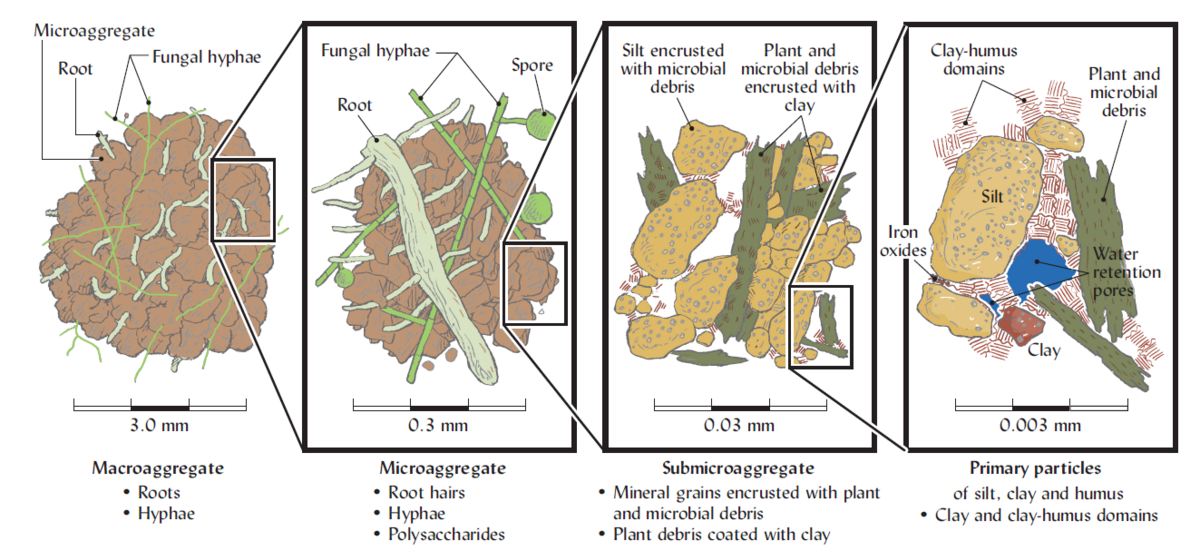
- Soil biology is a key driver of aggregation. In addition to physical and chemical structure formation, exopolysaccharides and glycoproteins (especially glomalin – secreted by mycorrhizal fungi) play a crucial role. Larger macroaggregates are formed exclusively through biological processes in the soil, particularly promoted by root hairs and fungal hyphae (Weil and Brady 2017).
Mycorrhiza:
- More than 80 % of vascular plants live in symbiosis with mycorrhizal fungi (Bonfante and Genre 2010). In exchange for carbon-containing compounds (root exudates) provided as an energy source, these fungi enhance the plant’s water and nutrient uptake through their fine hyphal diameter, extensive mycelial networks, and the mycorrhizosphere (Amelung et al. 2018). They are responsible for up to 80% of phosphorus uptake and contribute significantly to micronutrient acquisition (van der Heijden et al. 2008).
Earthworms:
- Over 40 of the world’s approximately 7,000 earthworm species are found in Germany (Peigné et al. 2017, Weil und Brady 2017).
There are three functional Groups:- Epigeic species: small worms that live in the litter or in soils rich in organic matter just below the soil surface. They are key decomposers of organic matter but do not engage in bioturbation.
- Endogeic species: mostly pale-colored worms that create shallow, predominantly horizontal burrows in the upper 10 to 30 cm of soil. They contribute to bioturbation within the A-horizon.
- Anecic species: larger worms, also known as "deep burrowers", that form vertical, continuous pores reaching several meters deep. The most well-known representative is the common earthworm (Lumbricus terrestris L.)
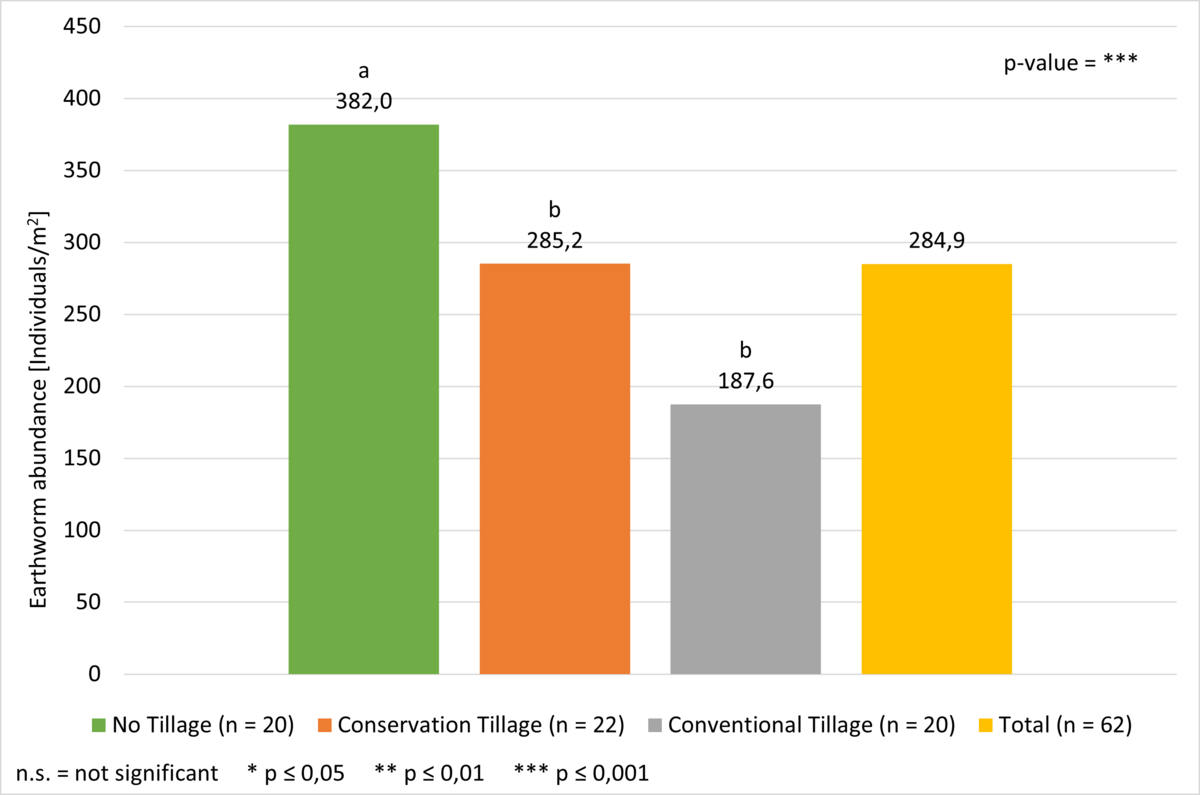
- Earthworm burrows are physically stabilized and biochemically reinforced by mucilage. Vertical pores play a crucial role in water infiltration, aeration, and deep root growth (Kemper et al. 2011). à A study in Wisconsin showed that continuous macropores in no-till systems increased the rooting depth of corn and wheat compared to conventional tillage by an average of 93%.
- A slightly acidic to neutral pH value and high calcium availability provide favorable conditions for the establishment of a high earthworm abundance (Weil and Brady 2017).
- In addition to no-till farming and the establishment of living roots throughout the year, the application of organic fertilizers and according to recent studies, especially the use of mob grazing can also increase earthworm abundance (Trickett and Warner 2022).
Find out more about this topic:
Practical Guide for assessing Earthworm Abundance in Soils