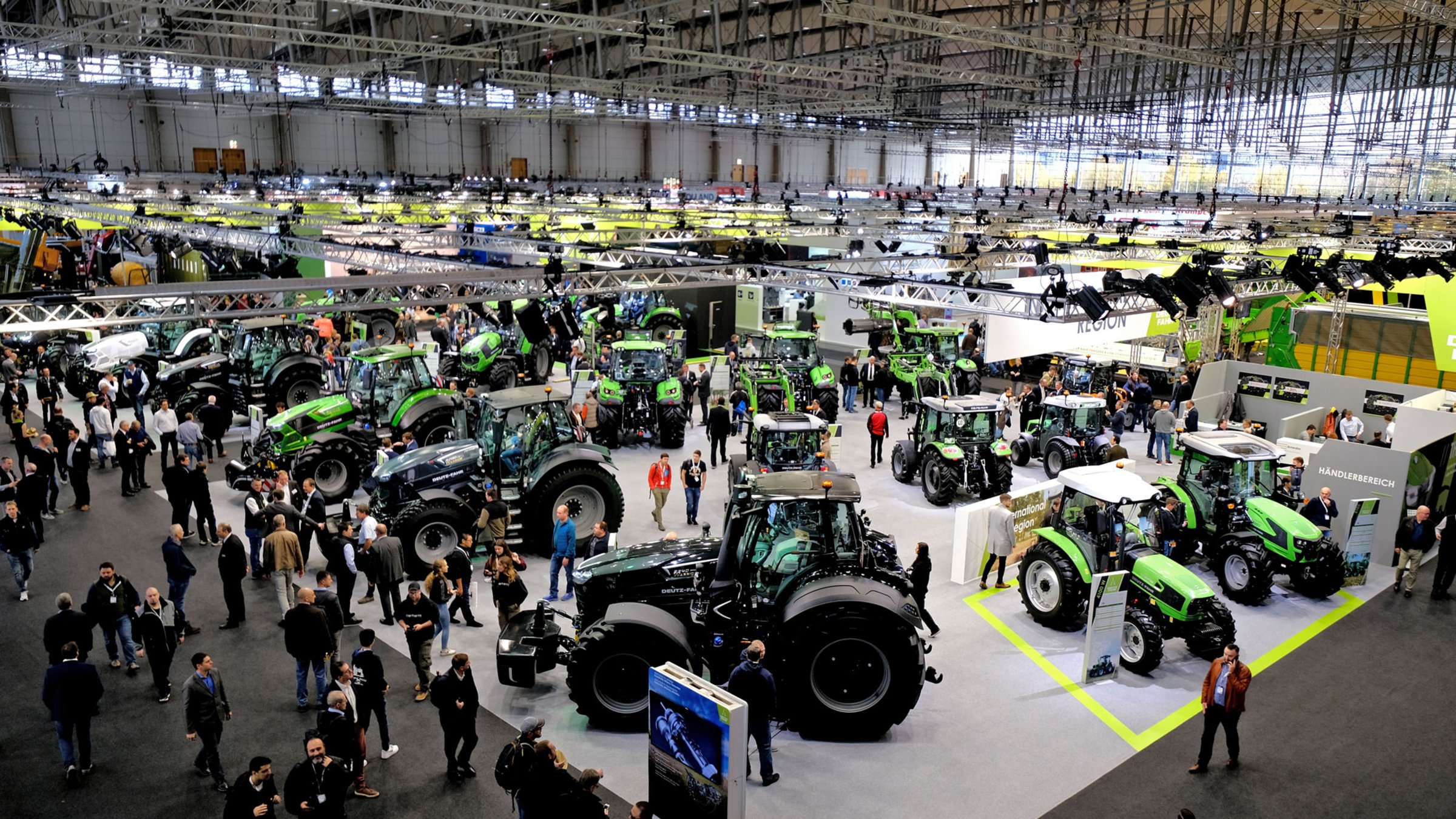
AGRITECHNICA Offers a Comprehensive Overview
Autonomous driving and robotics in agriculture will be major topics at AGRITECHNICA 2025. For technology-focused professionals, the trade fair is a showcase of innovation, as national and international manufacturers of autonomous technologies present their latest developments and solutions this November in Hanover Germany.
For the first time, DLG will introduce the “Digital Farm Center presented by FarmRobotix” in Hall 21. At its core are cutting-edge technologies in digital farming, automation, robotics, and artificial intelligence. At the heart of Hall 21 is the DLG Spotlight “Digital Farming”, where visitors can experience hands-on product demonstrations, expert talks, and interactive discussions — and speak directly with specialists on site.
Under the trade fair’s guiding theme “Touch Smart Efficiency,” the platform offers farmers, manufacturers, start-ups, researchers, and investors a wide range of opportunities for networking and knowledge exchange.
(Semi-)Autonomous fieldwork – Technology with potential and a future
Autonomous and semi-autonomous vehicles and machines are becoming increasingly common in agricultural fields. Enabled by technologies such as GPS, sensors, cameras, artificial intelligence (AI), and machine learning, modern robots and tractors can perform tasks independently while remaining under human supervision. Semi-autonomous systems support operators and help improve outcomes. At Agritechnica 2025, companies, start-ups, organizations and universities will present their solutions for autonomous and semi-autonomous fieldwork, encouraging engagement directly with visitors.
Robots and other autonomous machines working independently in the field are no longer a futuristic vision. While still an unusual sight, field robots are expected to become increasingly common in the coming years. Experts consider agricultural robotics to be one of the fastest-growing segments in the robotics industry. In addition to fully autonomous systems, there are also semi-autonomous solutions that still require human operation. Autonomous and semi-autonomous machines have been a hot topic in agricultural engineering for years, and their practical relevance is growing rapidly driven by the increasing shortage of skilled and seasonal labor on farms.
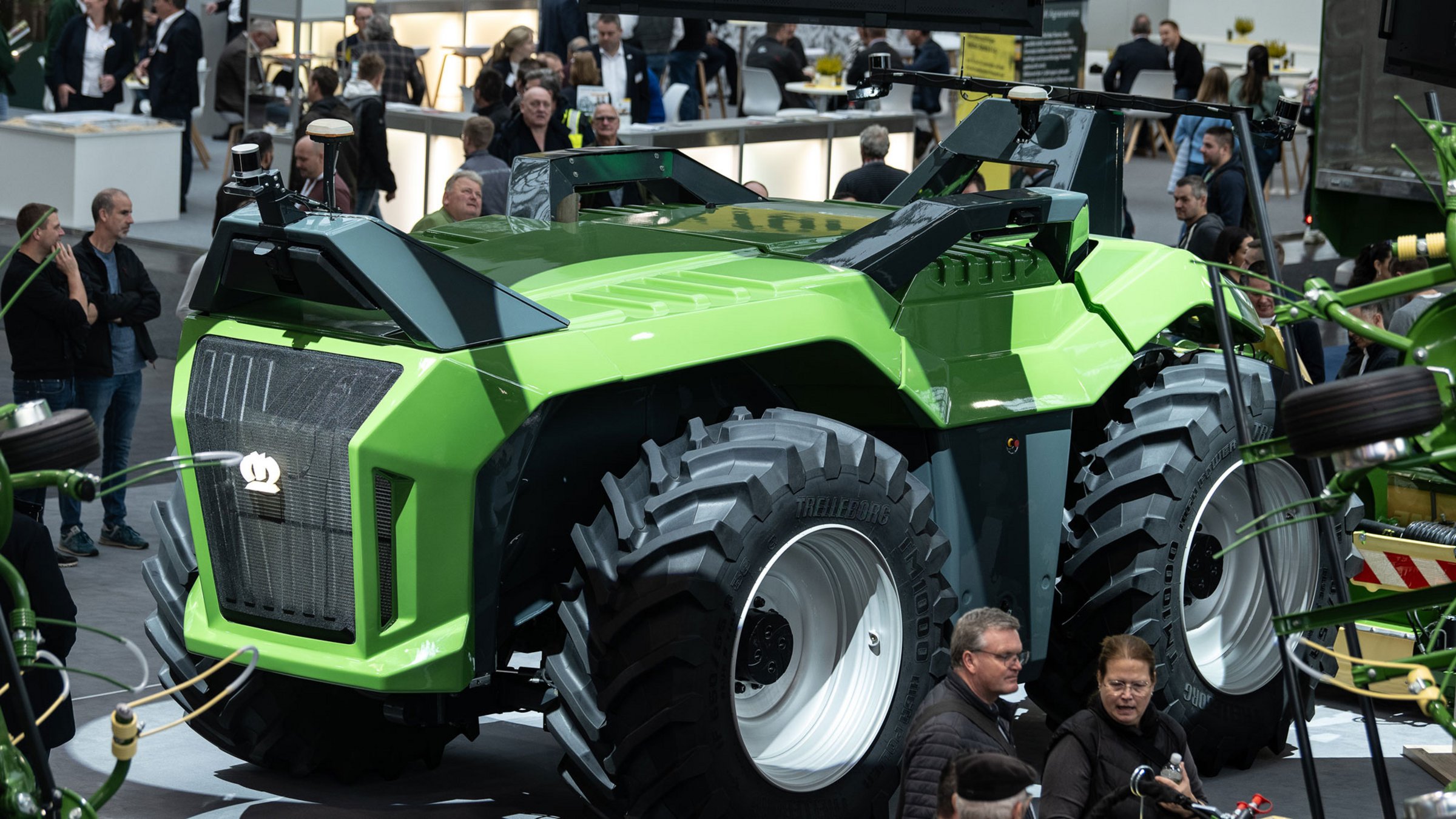
Solving Key Challenges
Autonomous vehicles and machines are seen as a solution to some of agriculture’s most pressing challenges. The promise of autonomous technology is that it reduces the workload for farmers and helps offset labor shortages. These machines take over routine tasks such as sowing and weeding — sometimes operating around the clock — freeing up time and capacity for other activities.
Thanks to GPS, sensors, AI, and machine learning, fertilizer and crop protection products can be applied with pinpoint accuracy, increasing yields and reducing input use. Additional benefits include reduced physical strain on operators, fewer peak workload periods, and improved work quality. Helping to reduce soil compaction, field robots generally have a significantly lower weight compared to tractors with mounted implements.
Focus on Specialty Crops
Autonomous sowing and weeding systems are already market-ready, and several production models are in use on German farms. Their primary application is in specialty crops, particularly vegetable production. Today’s field robots, equipped with advanced sensor and camera technology, can weed not only between rows but also within rows — with millimeter precision around the crop plants. The latest camera systems with AI-based image recognition can even distinguish between crops and weeds at the seedling stage.
Field robots typically operate at low speeds when weeding — just a few kilometers per hour — but they can work 24 hours a day. Practical experience reports time savings of up to 80% compared to manual weeding. Autonomous technology is especially useful in labor-intensive systems such as organic farming and specialty crops with high profit margins.
However, practical experience also shows that reconfiguring robots for different crops can be complex, which is why they often remain dedicated to a single crop. Full process chain automation in arable and specialty crop farming is possible with platforms like the Tipard 1800 from Digital Workbench, which can handle sowing, fertilizing, weeding, and harvesting — even in fruit production.
Autonomy for Tractors
In large-scale arable farming, automation is more difficult to implement economically due to the high levels of mechanization already in existence. Nevertheless, farmers can benefit from autonomous field vehicles by, for example, driving an autonomous tractor to the field, letting it operate independently, and using the freed-up time for other tasks. Applications include soil cultivation, sowing, fertilization, crop protection, and harvesting.
In recent years, manufacturers such as Claas, John Deere, Case, and Fendt have developed (semi) autonomous tractors based on standard models. Several companies now offer retrofit kits to upgrade existing tractors for highly automated operation. Researchers at Fraunhofer IOSB recently introduced a retrofit kit that allows a tractor to be remotely operated from over 200 kilometers away. While such long-distance control raises questions, plug-and-play solutions like this could offer a simple upgrade path for existing fleets in the future.
However, liability and safety regulations for autonomous tractors remain unresolved. In many regions, broadband coverage is still insufficient to ensure reliable connectivity with machines in the field — a challenge that also affects field robots.
Smart Setup and Monitoring Systems
In addition to fully autonomous machines, there are semi-autonomous systems that perform specific tasks or processes independently but still require human supervision. Assistance systems and automation features help operators with setup and monitoring, enabling higher field efficiency and improved work quality. Cameras and sensors combined with intelligent data processing play a central role. Over the past two years, existing systems have been further developed, and the range of semi-autonomous solutions has expanded, offering real value to farmers.
Examples of semi-autonomous systems in combine harvesters include automated threshing adjustments based on environmental factors such as moisture, automatic slope compensation, and sensor-controlled fans and sieves to minimize losses. For tractors, semi-autonomous functions include widely used high-precision GPS and RTK-based steering systems.
Adoption Remains Cautious, Clear Potential
While there’s no widespread rush toward autonomous technologies yet, their potential is undeniable. Young, tech-savvy farmers in particular are showing strong interest. Most German states offer funding programs to support the purchase of agricultural robots, helping offset the high investment costs.
Field robots and autonomous tractors will play a major role in the future of agriculture. They help address labor shortages, reduce operator workload, and improve work quality. Depending on the crop and farm size, some systems can pay for themselves in a relatively short time. Progress in legal frameworks and nationwide broadband and mobile coverage will be key to unlocking their full potential.