

List of nominees for 2025
SYSTEMS & COMPONENTS Trophy
As part of AGRITECHNICA, the DLG awards the ‘SYSTEMS & COMPONENTS Trophy – Engineers’ Choice’ for components and systems. In doing so, it recognises the significant role and innovative strength of the agricultural machinery supply industry.
From a shortlist of 16 nominees, a jury comprising development engineers from the agricultural machinery manufacturers exhibiting at AGRITECHNICA 2025 selected the winners of the trophy in a second round of judging.
Bosch Rexroth AG
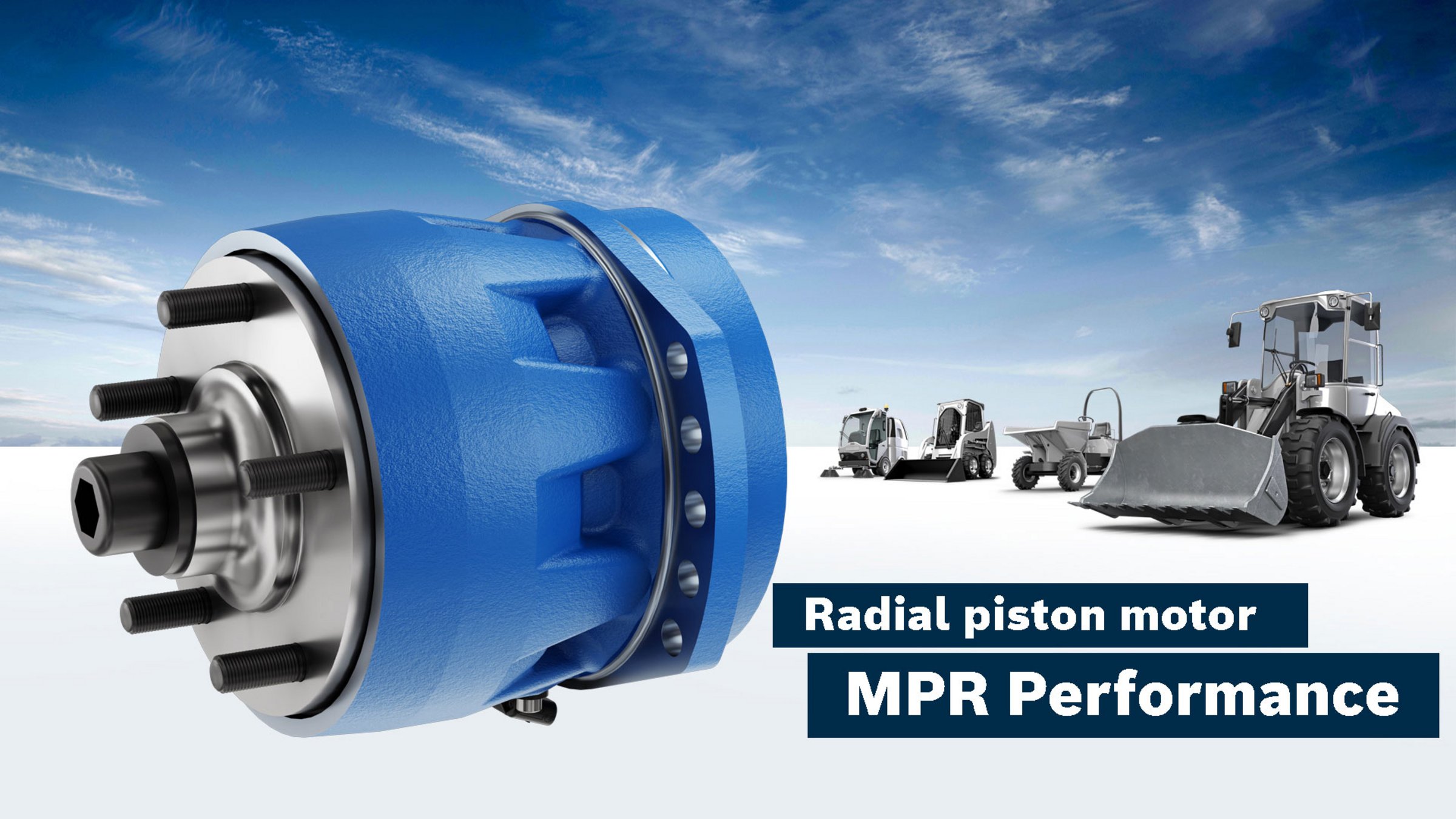
Rexroth MPR Performance Motor
Hall 16 | Stand A05
Subject Area 05 | Hydraulics
A radial piston motor is a hydraulic drive component that converts hydraulic pressure into mechanical energy. Following a prolonged period of stagnation in development, OEM requirements have risen sharply in recent years, both in terms of potential performance figures and in terms of size and weight.
The MPR Performance Motor from Bosch Rexroth is a new-generation radial piston motor designed to meet the demands of high-performance agricultural vehicles requiring low speeds and high torque. The hydraulic motor is up to 30 per cent shorter and 10 per cent lighter than the previous generation and offers 27 per cent more tractive force and a 25 per cent higher maximum speed. This increase in efficiency and flexibility results in significant fuel savings and simplified machine designs. Seamless integration into a hydrostatic drive control system featuring BODAS drive and eDA software further enhances performance and efficiency. Added to this are a simple design with 25 per cent fewer components and reduced maintenance requirements due to the design itself.
All in all, the MPR Performance Motor from Bosch Rexroth is a high-performance, cost-effective motor, manufactured in Europe with industry-leading lead times and characterised by an excellent ability to respond to customer needs.
Bosch Rexroth AG
Bosch Rexroth Power and Motion Control eLION Platform
Hall 16 | Stand A05
Subject area 07 | Drivetrain technologies
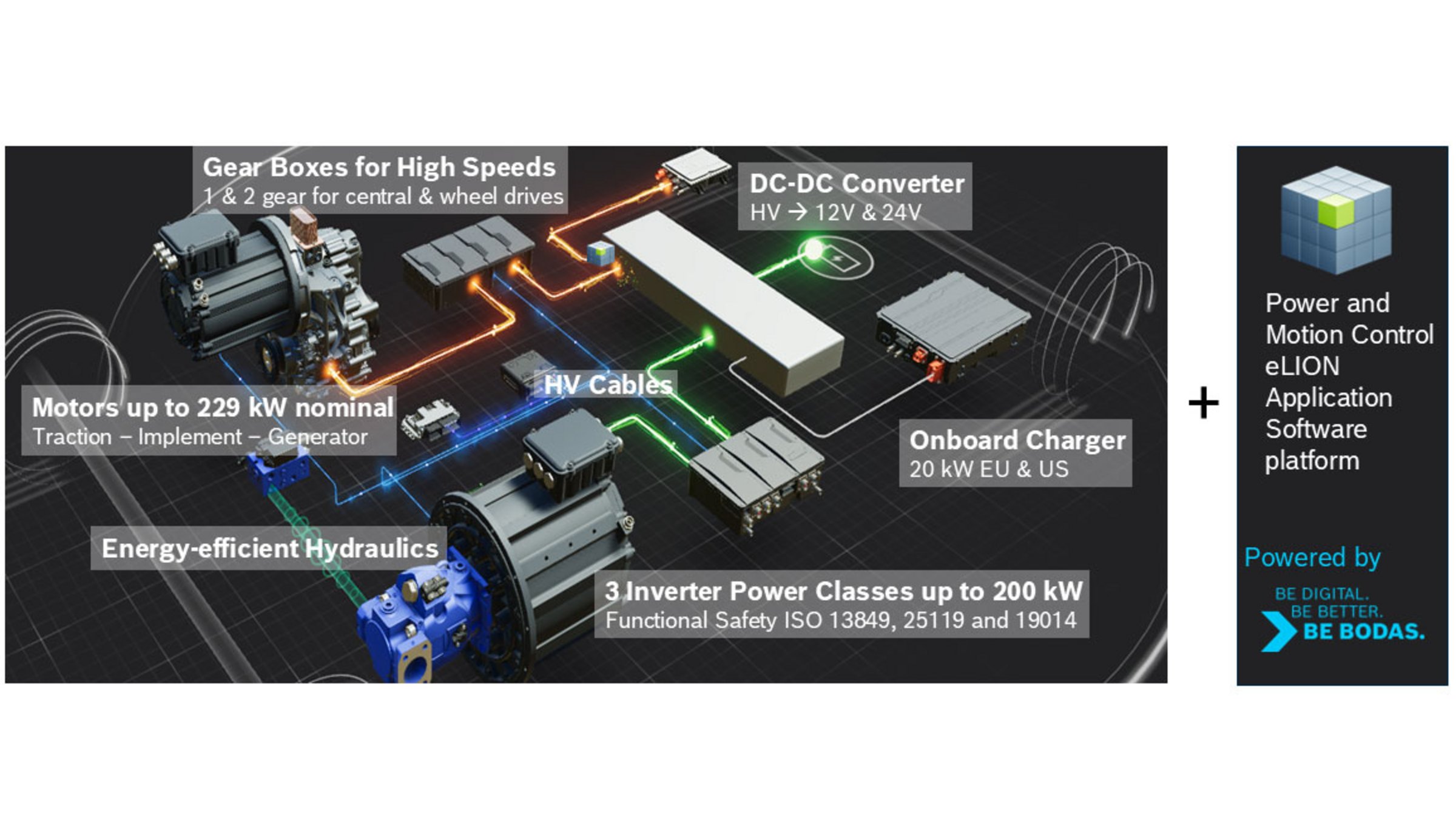
Until now, integrating electric drives into agricultural machinery has required a bespoke software approach – a process that is time-consuming and resource-intensive due to the necessary specifications and implementation.
The eLION Power and Motion Control Software Platform now significantly speeds up and increases the flexibility of this development stage. Comprising inverters, motors, on-board chargers and DC-DC converters that can be flexibly combined, the eLION portfolio enables the electrification of a wide range of applications. The eLION Power and Motion Control software platform facilitates the combination of three platforms: BODAS Power Control PCL for controlling the high-voltage system and energy management, BODAS-Drive eDA for controlling the traction drive, and BODAS Pump Drive Control eOC for controlling the pump drive, thereby enabling noise- and efficiency-optimised operation. This results in reduced demand for fossil fuels and lower noise emissions, thereby protecting the environment.
The eLION Power and Motion Control Software Platform thus enables the rapid and flexible electrification of agricultural machinery and vehicles.
Casappa S.p.A.
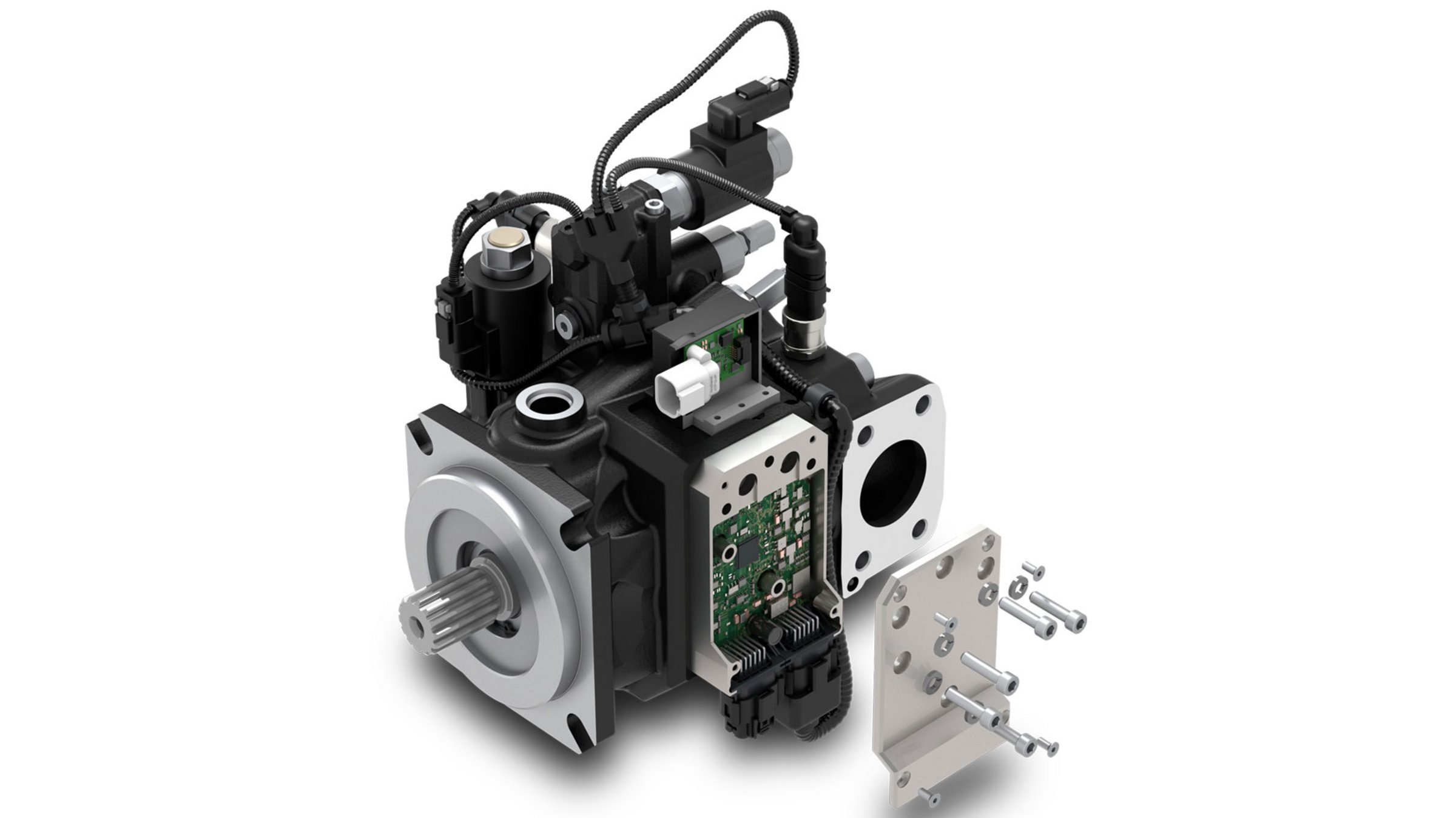
Casappa Smart Data System
Hall 16 | Stand B11
Subject Area 05 | Hydraulics
Axial piston pumps are characterised by very high efficiency. However, there is scope for improvement through precise control of the flow rate, thereby optimising the adaptation of the overall system to varying load conditions, as well as through improvements in maintenance intervals and machine uptime.
Casappa is now taking the variable-displacement axial piston pumps typically used here to a new level with its Smart Data System. Fitted to the MVPS series piston pumps, the system – with its innovative integration of embedded electronics and miniaturised sensors – not only enables continuous monitoring of key hydraulic data but also allows the load level to be analysed. This allows anomalies to be detected at an early stage, failures to be reliably predicted, and alerts to be displayed both within the machine control system itself and externally via the cloud. Particularly noteworthy is the fluid analysis sensor developed in collaboration with Sanchip, which enables oil quality to be monitored online.
The direct integration of all electronic components and sensors eliminates the need for external cabling and distributed sensors, simplifies the machine layout, reduces costs and represents a significant advance over the previous state of the art.
CLAAS E-Systems GmbH
MK5 Stereo Camera
Hall 15 | Stand F15
Subject Area 06 | Vehicle Electronics
Stereo cameras have been in use for some time now for surveying the surroundings and controlling mobile machinery, for example in row crops. However, the necessary analysis of the camera data often still has to be carried out on the machine’s central computer. This, along with the implementation of the relevant algorithms, regularly poses a challenge for OEMs.
The MK5 stereo camera from Claas now combines, for the first time, the capability for complex calculations with the durability and robustness required for the particularly harsh conditions of the agricultural environment, all within a single complete system. In addition to analogue video transmission and CAN communication, the camera also offers the option of provide communication and digital video via a BroadR-Reach Ethernet connection – a standard well-known in the automotive industry – which enables future-proof use in both current and future machine architectures. The system’s high computing capacity enables even highly complex computational operations to be carried out directly within the camera. The data can then be output in a wide variety of formats, thereby eliminating the need for an external processing unit. This opens up entirely new application possibilities in agricultural technology.
The Claas MK5 stereo camera thus represents a significant innovation for the future of 3D image-based environmental sensing and the control of mobile machinery in agriculture.
Flexxaire Inc.
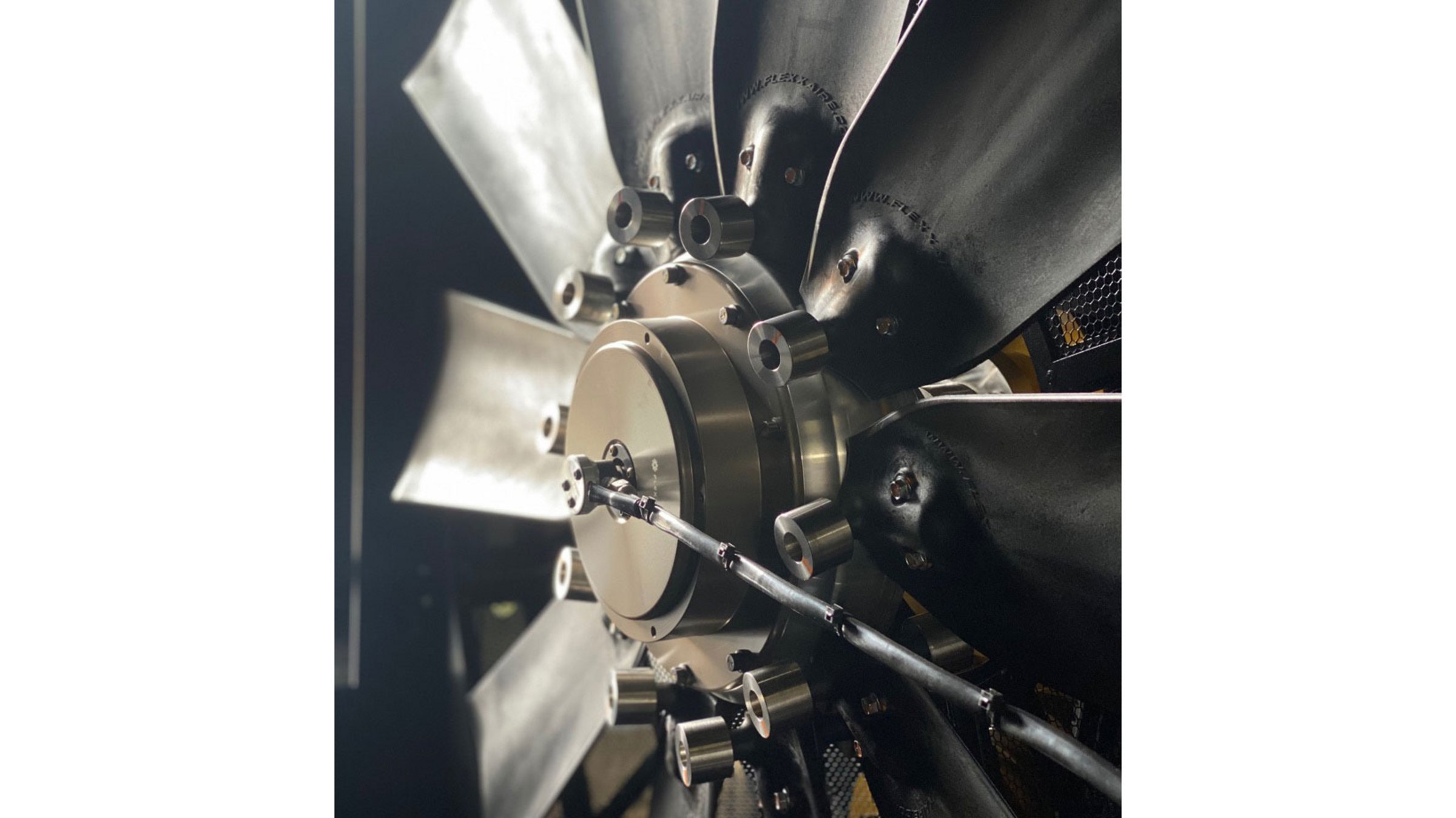
Flexxaire Infinite Variable Pitch Fan
Hall 15 | Stand J04
Product Group 03 | Spare and replacement parts
At full cooling capacity, the drive power required for the engine cooling system’s fan can easily amount to several per cent of the tractor’s rated power, particularly where fan speeds are fixed or only roughly graduated. Optimising radiator ventilation to match the engine power actually required – and thus the waste heat generated – therefore offers considerable potential for fuel savings.
The Infinite Variable Pitch (IVP) fan from Flexxaire is the first fan system capable of automatically adjusting the pitch of the fan blades in real time to the machine’s operating parameters, based on data available on the CAN bus. This ensures optimum airflow, lower fuel consumption and quieter operation. The system is also capable of reversing its direction of rotation to remove debris from the cooling system. This maximises the machine’s cooling performance and uptime in demanding environments. The IVP ventilation system can be seamlessly integrated into modern engine control units, offering both performance optimisation and reduced maintenance requirements in a single, intelligent component.
By combining available engine and machine load data with adaptive fan control, and by automating cooling and cleaning, the Flexxaire Infinite Variable Pitch Fan can further improve machine efficiency. This reduces operating costs and extends the service life of the machines whilst increasing uptime.
HYDAC International GmbH
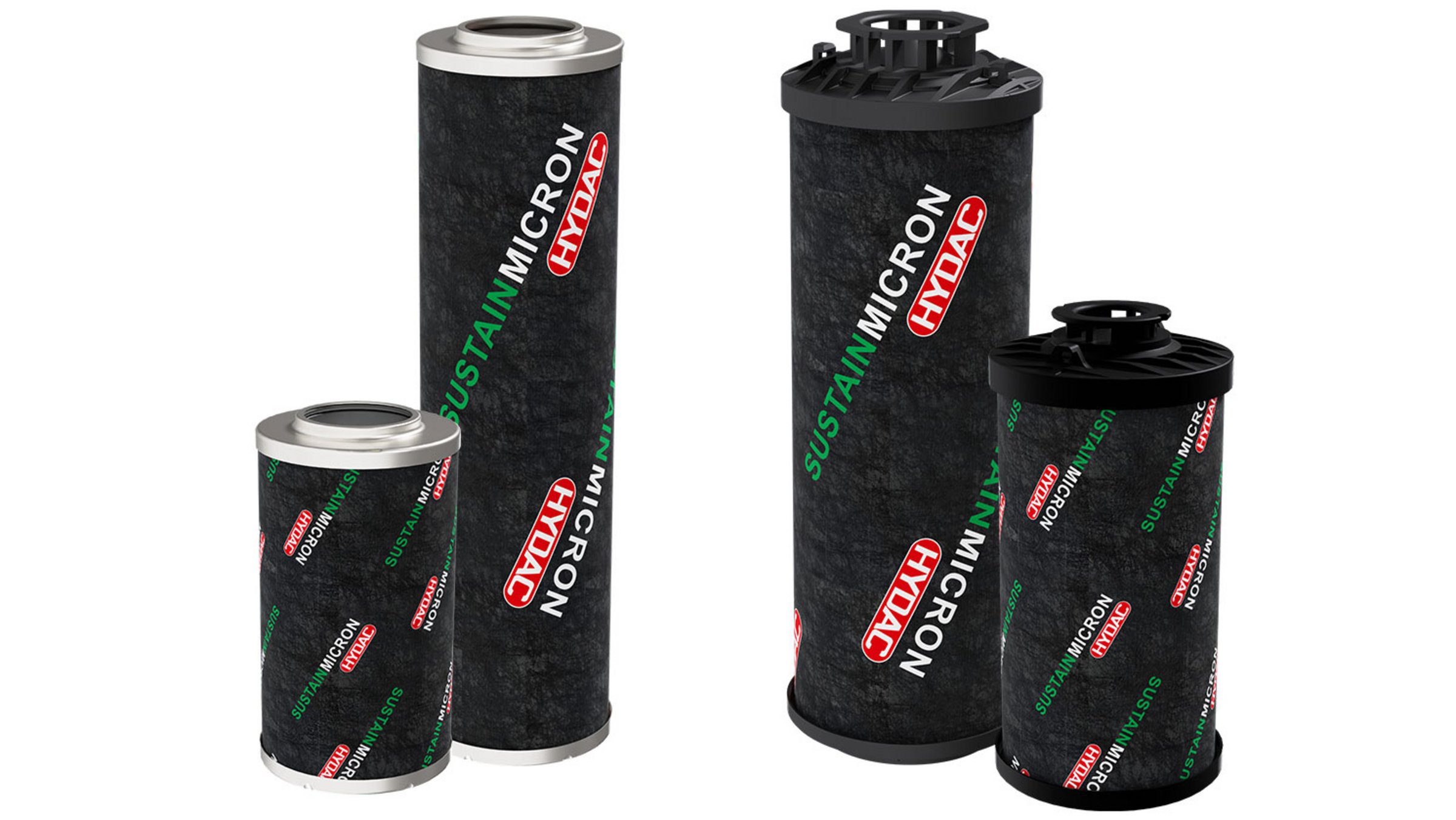
SUSTAINMICRON® – the new standard in filter element technology
Hall 17 | Stand H15
Product Group 03 | Spare and replacement parts
Abrasion and foreign particles are the natural enemies of any hydraulic system and must be removed using appropriate filter systems. To this end, a constant flow rate is maintained through the hydraulic oil filter. Measured via the differential pressure – i.e. the pressure drop across the hydraulic oil filter – maintaining this flow rate requires an increasing amount of energy as the filter becomes more contaminated.
Hydac’s universal SUSTAINMICRON filter element sets a new standard in this regard. Thanks to its special filter design, the differential pressure caused by the oil filter can be reduced by up to 30 per cent without compromising filter performance, as was previously the case. A new outer casing made from special two-component fibres significantly reduces the risk of electrostatic discharges, which not only helps to minimise system failures caused by such discharges but also leads to improved oil stability and, consequently, longer maintenance intervals. The filter system can be used wherever first-class filtration and high efficiency are required, regardless of the drive technology.
Thanks to the significant increase in efficiency and the marked optimisation of electrostatic behaviour, the Hydac SUSTAINMICRON hydraulic oil filter element represents a major innovation.
HYDAC International GmbH
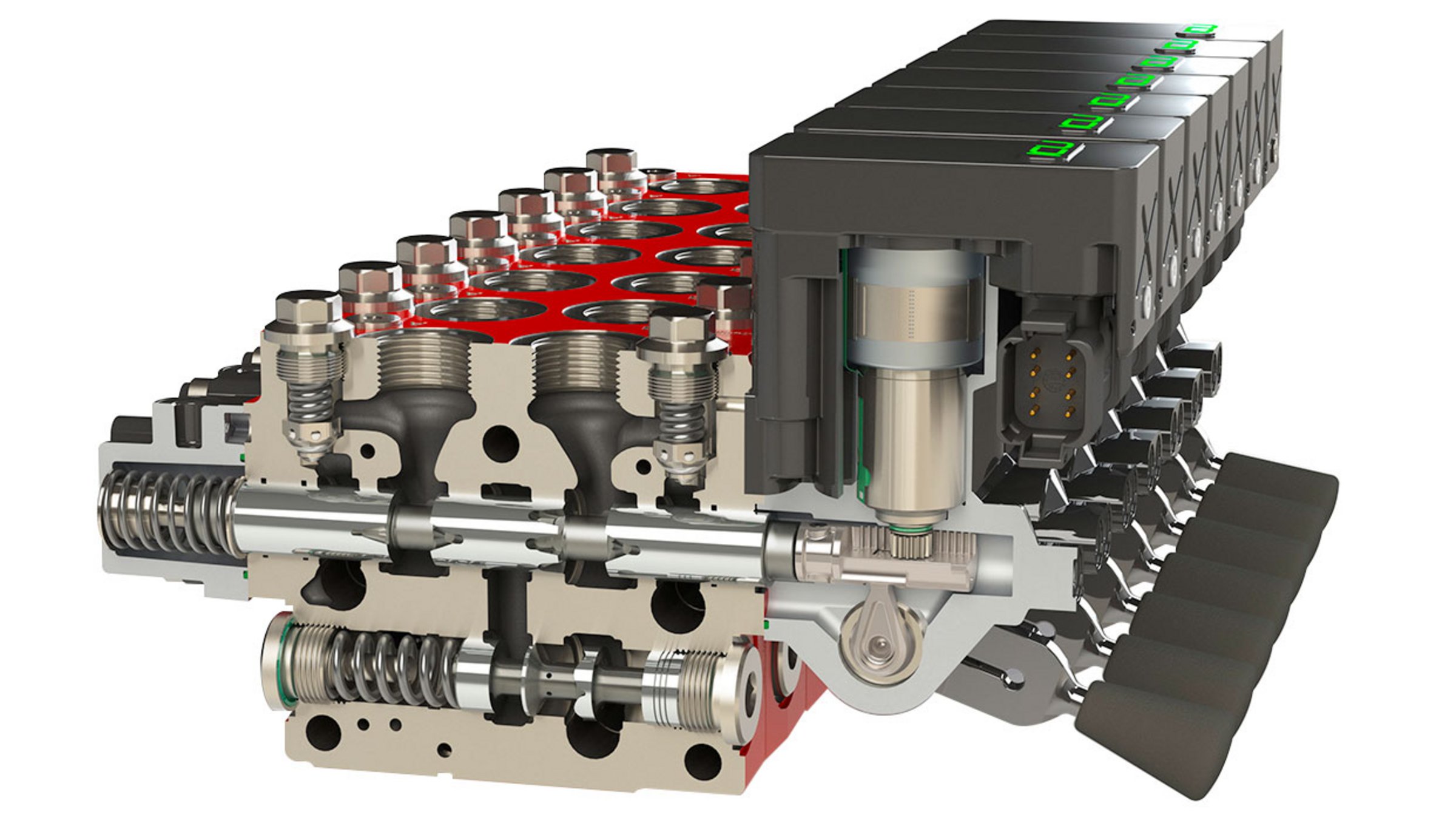
HYDAC LX load-sensing valves with Intelligent Control Unit (ICU)
Hall 17 | Stand H15
Subject Area 05 | Hydraulics
A hydraulic manifold is a component that regulates the flow of fluid between pumps, actuators and other components in a hydraulic system. The manifold is therefore at the heart of a mobile machine, and its quality and functionality play a decisive role in determining the performance of the entire vehicle.
The new HYDAC LX electromechanical load-sensing valves with an Intelligent Control Unit (ICU) offer several key advantages over most electro-hydraulic systems. For instance, the system operates without control oil and is therefore unaffected by the stability of the pressure oil supply, temperature or oil viscosity. The HYDAC LX load-sensing valves with an intelligent control unit also operate without hysteresis, meaning they are repeatable and incur no response time losses. Compared to electro-hydraulic actuation, energy consumption is significantly reduced as there are no losses caused by the pilot oil circuit. Furthermore, the ICU transforms the LX valves into an intelligent system. The valve block receives its SET solenoid positions from the control unit via the CAN bus and adjusts them in a very short time.
The HYDAC LX load-sensing valves with Intelligent Control Unit (ICU) thus offer high precision, TÜV-certified safety and reliability even under the harshest environmental conditions, whilst delivering improved efficiency.
igus GmbH
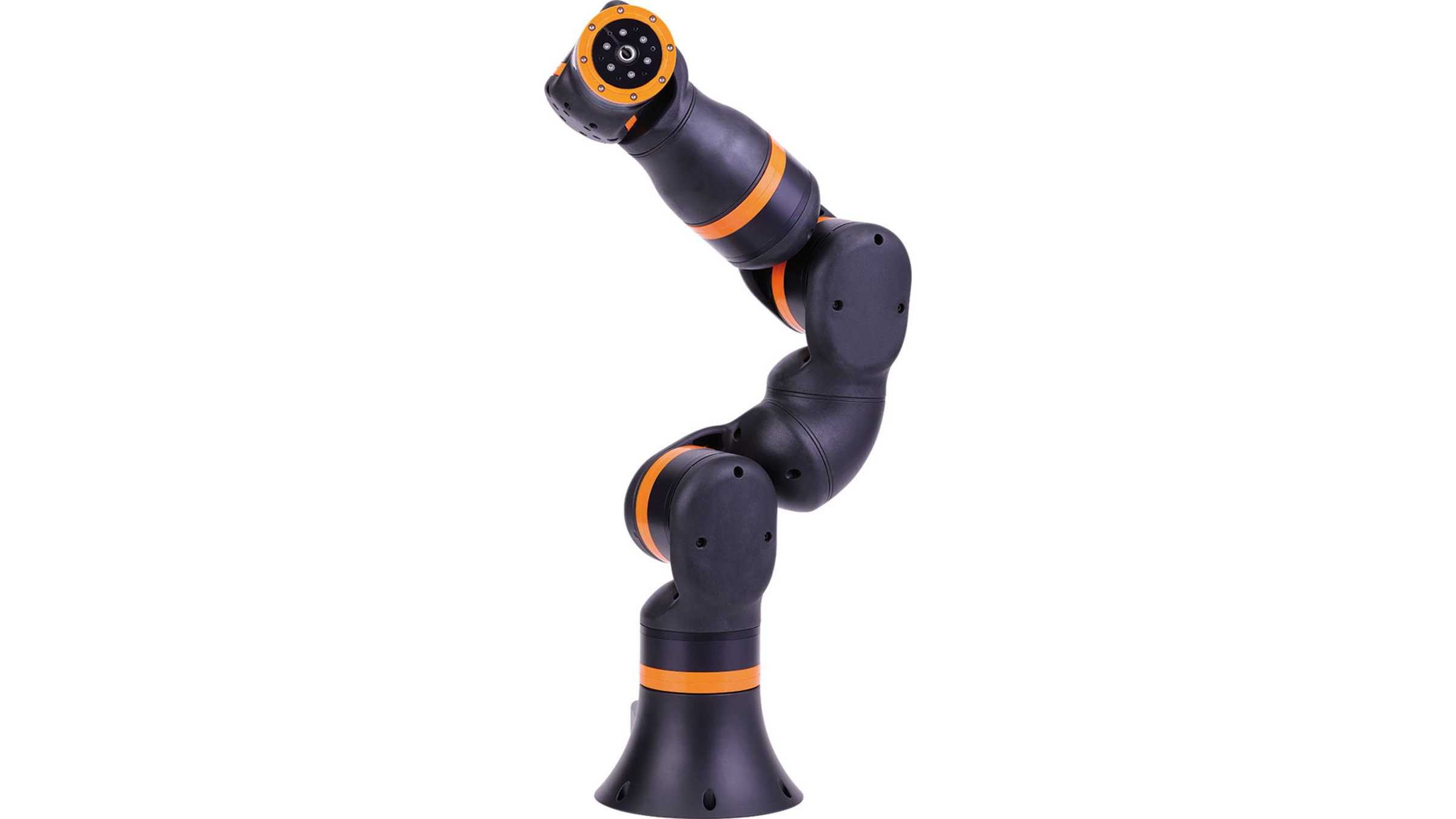
ReBeL Cobot
Hall 16 | Stand E11
Subject Area 06 | Vehicle Electronics
High-precision and repetitive tasks such as weeding or fruit harvesting are often physically demanding and are still frequently carried out manually, requiring a significant workforce.
With the ReBeL Cobot, igus has now introduced an articulated arm robot weighing just 8 kg, which, thanks to its particularly simple operation and low price, makes the transition to automation in agriculture easier and more accessible than ever before. Equipped with sensors and grippers, it is ideally suited to tasks such as fruit harvesting, sowing or indoor farming. Depending on the application, the robotic arm can be fitted with various sensors, such as cameras, or work tools. Added to this is a simple, user-friendly and practical programming option. Using a cost-free, licence-free software test environment, users can test any kinematic configuration and thus determine, even before purchase, whether their planned application can be realised with the ReBeL.
When mounted on a suitable autonomous chassis, the igus ReBeL cobot can, for example, reduce the number of workers required during harvesting whilst enabling a higher number of harvesting passes, leading to greater efficiency and a reduced workload for harvesting staff.
Mach, Inc.
RadX
Hall 17 | Stand C05
Subject Area 06 | Vehicle Electronics
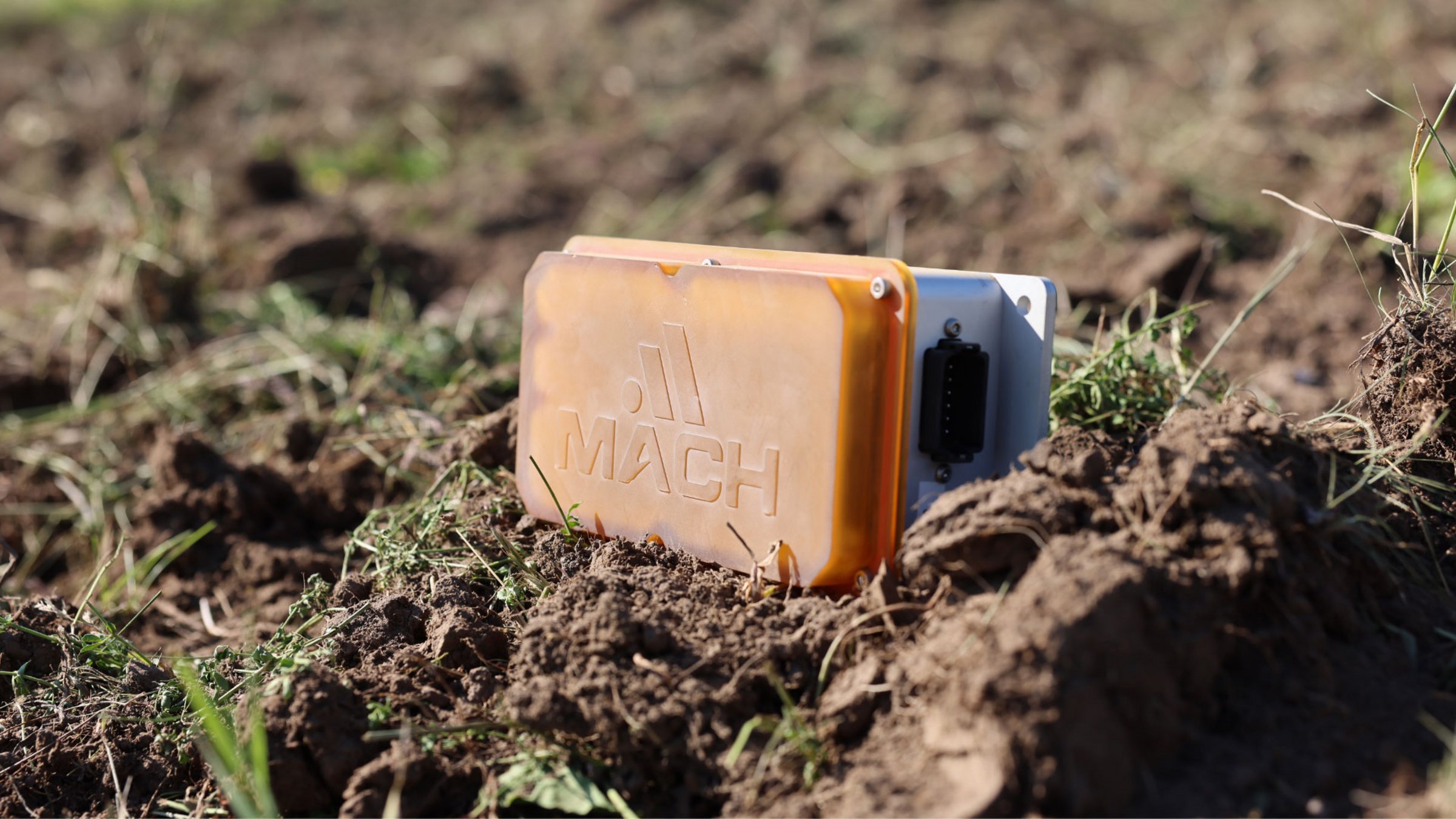
The more technological development progresses, the more sensors are being used in agricultural machinery and tractors to improve their control systems. The raw data from these sensors is processed centrally, placing high demands on computing power and data analysis. OEMs repeatedly face difficulties in evaluating sensor data and programming efficient analysis algorithms.
Mach’s RadX radar unit is the first system of its kind to not only bring true phased-array technology to agriculture, construction, mining and land management, but also to process the captured signals internally and make them available within the OEM’s system architecture. The system utilises electronically steered beams and adaptive beamforming for high-resolution, real-time 3D detection, meaning no moving parts are required.
RadX is capable of distinguishing between soil, crop residues and vegetation, whilst simultaneously mapping the terrain surface, making the sensor particularly suitable for depth control in soil cultivation, planting and sowing machines, as well as for terrain guidance of combine harvester heads. It is also conceivable that the quality of work behind the machine could be assessed.
The RadX system from Mach thus represents a significant innovation for the future of 3D image-based environmental sensing and the control of mobile machinery in agriculture.
MOBA Mobile Automation AG
AGRI-SONIC
Hall 17 | Stand B18
Subject Area 06 | Vehicle Electronics
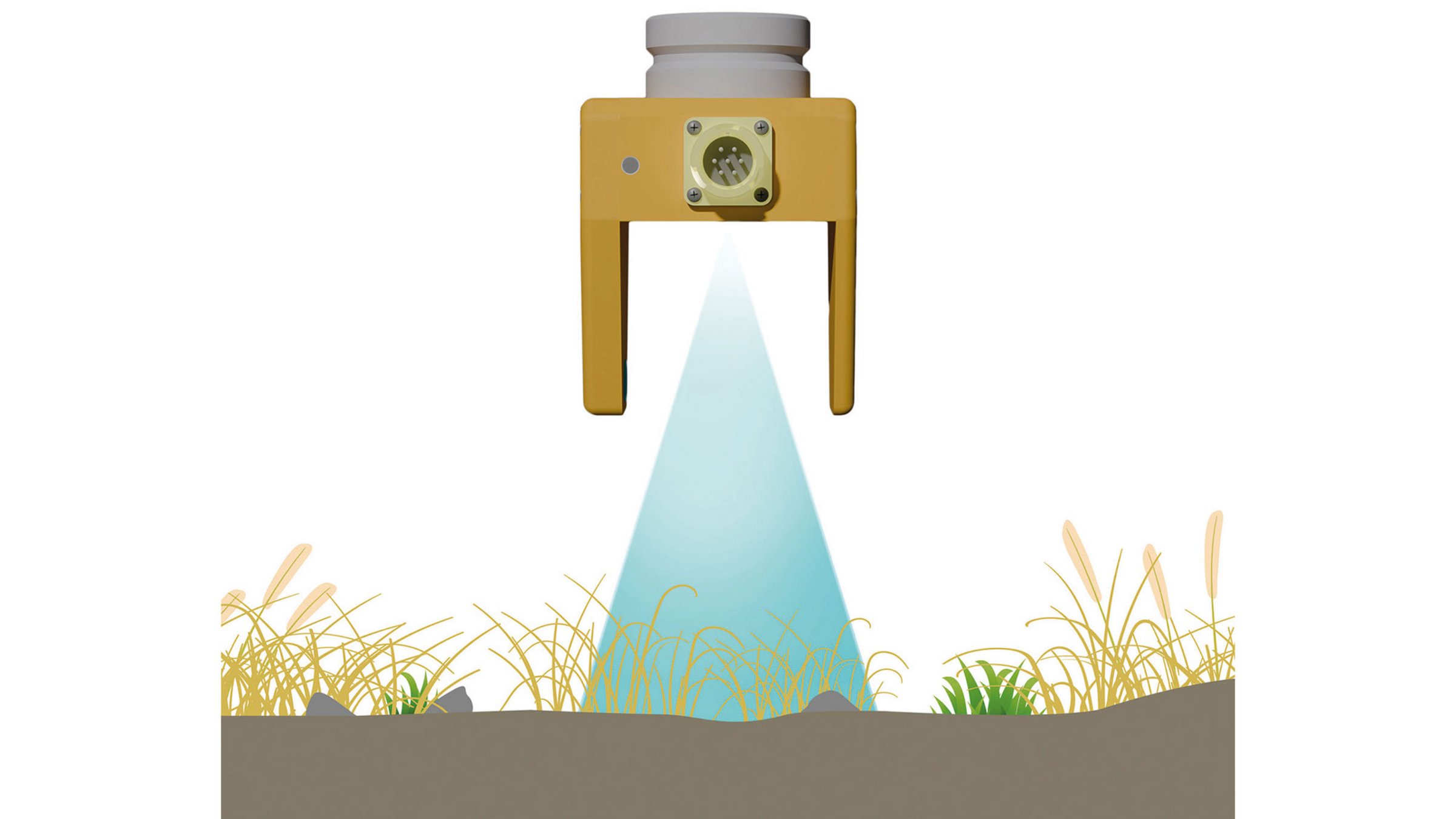
Achieving precise depth control in soil-working machinery is particularly challenging because soil conditions are constantly changing. Automating the depth control process depends entirely on the accurate detection of the soil surface.
The Agri-Sonic from MOBA Mobile Automation solves this problem using a particularly advanced ultrasonic sensor. Ultrasonic sensors continuously emit ultrasonic waves and detect their reflections from surfaces. The Agri-Sonic not only captures the first echo, but also several different reflection patterns. This allows the actual position of the soil surface to be identified and determined, even beneath vegetation and crop residues. The Agri-Sonic’s built-in electronics output precise depth readings via the CAN bus in real time; these are displayed directly to the operator on a screen in the cab or can be used to automate depth control.
The Agri-Sonic ultrasonic sensor thus significantly enhances the capabilities of modern soil cultivation, where a precise and shallow working depth is essential for preserving soil structure and improving efficiency. Every additional centimetre of depth increases fuel consumption and accelerates component wear.
POCLAIN
MHD09 – The Dual Technology
Hall 16 | Stand B18
Subject Area 05 | Hydraulics
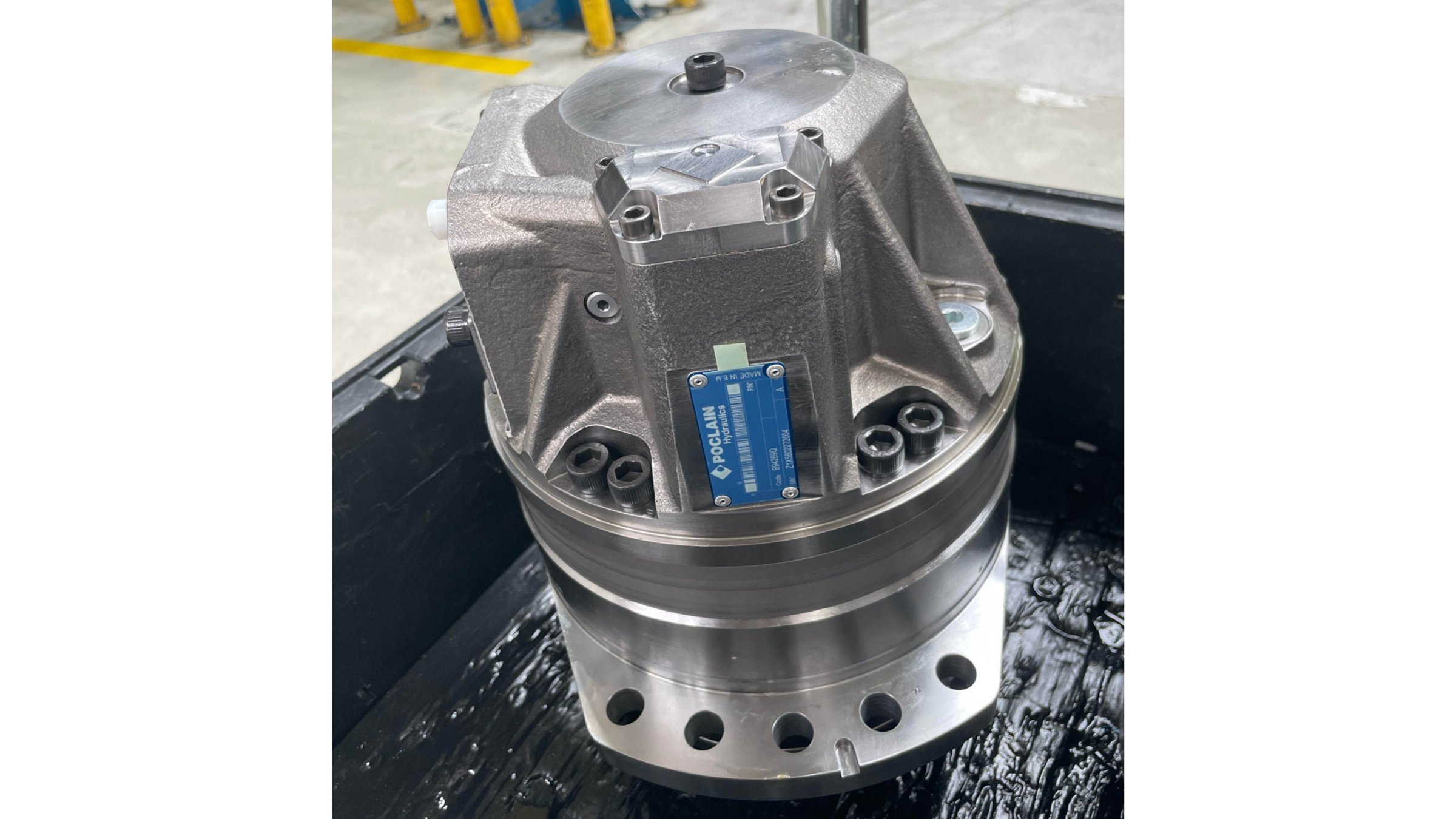
Whilst high-torque, low-speed motors (HTLSMs) are known as direct-drive motors for their exceptional efficiency at low speeds, there are limitations in terms of service life and internal pressure losses in certain high-performance applications.
Poclain has now developed a new generation of radial piston motors, the MHD09 – The Dual technology, which enables all pistons to be used continuously. This reduces the total contact pressure by at least a factor of four at high power output compared with the current solution, without the need for additional parts or materials. This improvement is achieved without compromising the motor’s compactness or size. Furthermore, Poclain is introducing a new technology to completely eliminate internal recirculation: a vacuum is created within the motor’s lines and the pressure is reduced to almost 0 bar, resulting in significantly lower internal losses and the possibility of significantly higher speeds.
With its innovative MHD – The Dual technology, Poclain is offering OEMs a significant optimisation in the field of high-torque, low-speed motors.
RAFI GmbH & Co. KG
SAFETY TOUCH
Hall 17 | Stand B29
Subject Area 06 | Vehicle Electronics
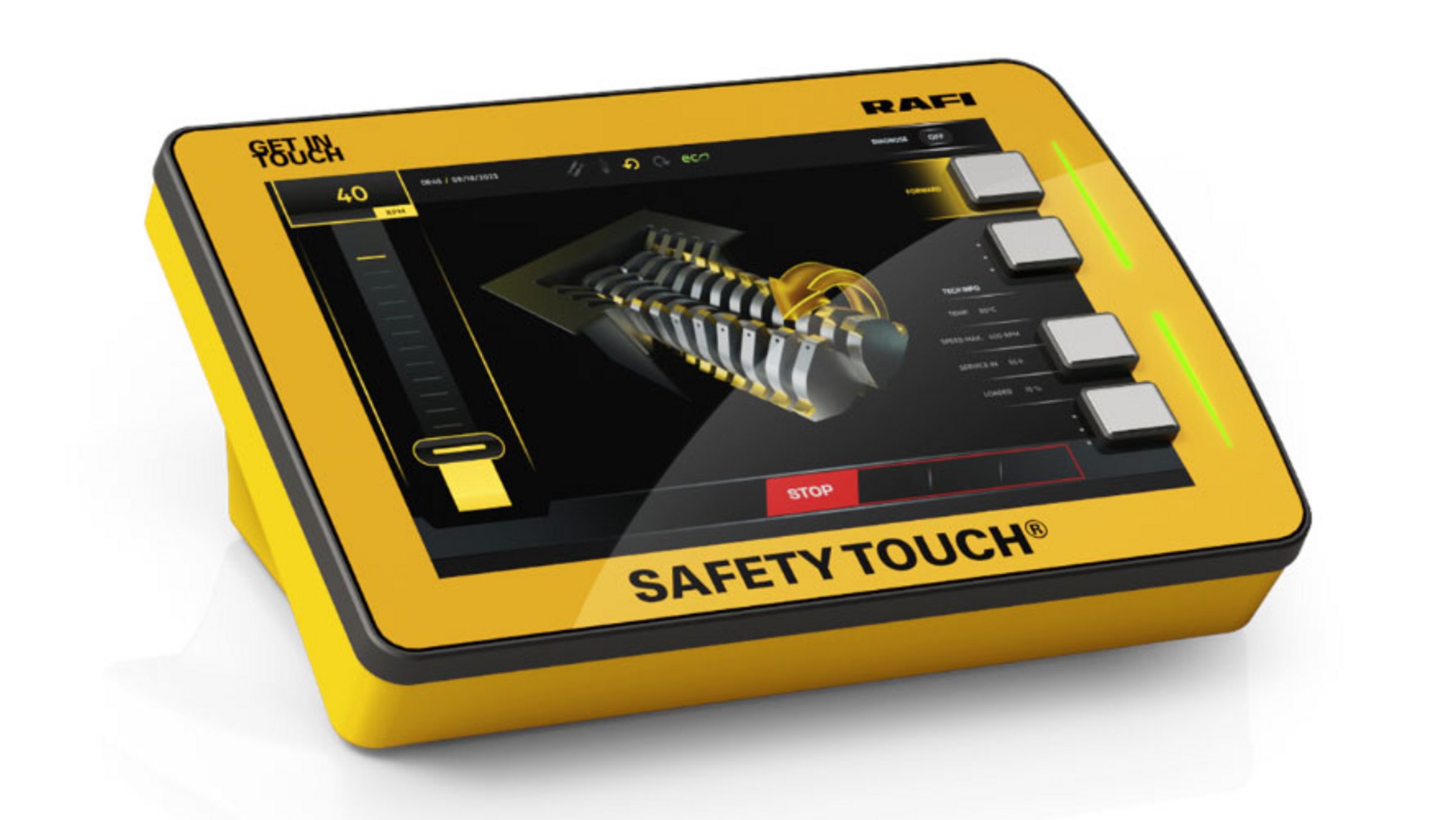
Touchscreens are now very widespread, not least because of their intuitive operation and the ability to place individual control elements where they are logically arranged and ergonomically within easy reach. However, due to their design, touchscreens are susceptible to operational errors – for example, through accidental contact – which has so far ruled them out for controlling safety-critical functions.
Rafi’s Safety Touch now bridges this gap and, for the first time, enables safety-critical functions to be operated directly via the touchscreen, leading to greater design flexibility in terms of ergonomics and increased operational efficiency, whilst complying with strict safety standards. To achieve this, Safety Touch utilises touch detection combined with simultaneous measurement of the actuation force to ensure intentional input and prevent accidental activation of the safety-critical function. This is complemented by optical and electrical monitoring, as well as content integrity checks, to ensure that the correct screen content is displayed. Thanks to the level of safety achieved, the Safety Touch can display safety-relevant elements as well as activate safety-critical functions for which other hardware, such as an electromechanical control system, would otherwise be required.
The Safety Touch thus eliminates the need for specialised input elements such as pushbuttons, which were previously required for safety-related actions in conventional user interfaces. This enables greater flexibility, improved ergonomics and optimised workflows without compromising safety.
SICK AG
multiScan100-S
Hall 17 | Stand B21
Subject Area 06 | Vehicle Electronics
As development has progressed and in order to control agricultural and construction machinery as well as tractors ever more effectively and efficiently, an increasing number of sensors have been fitted. With current state-of-the-art technology, the raw sensor data is transmitted to the central machine computer and processed there. The evaluation of sensor data and the programming of analysis algorithms regularly present OEMs with difficulties.
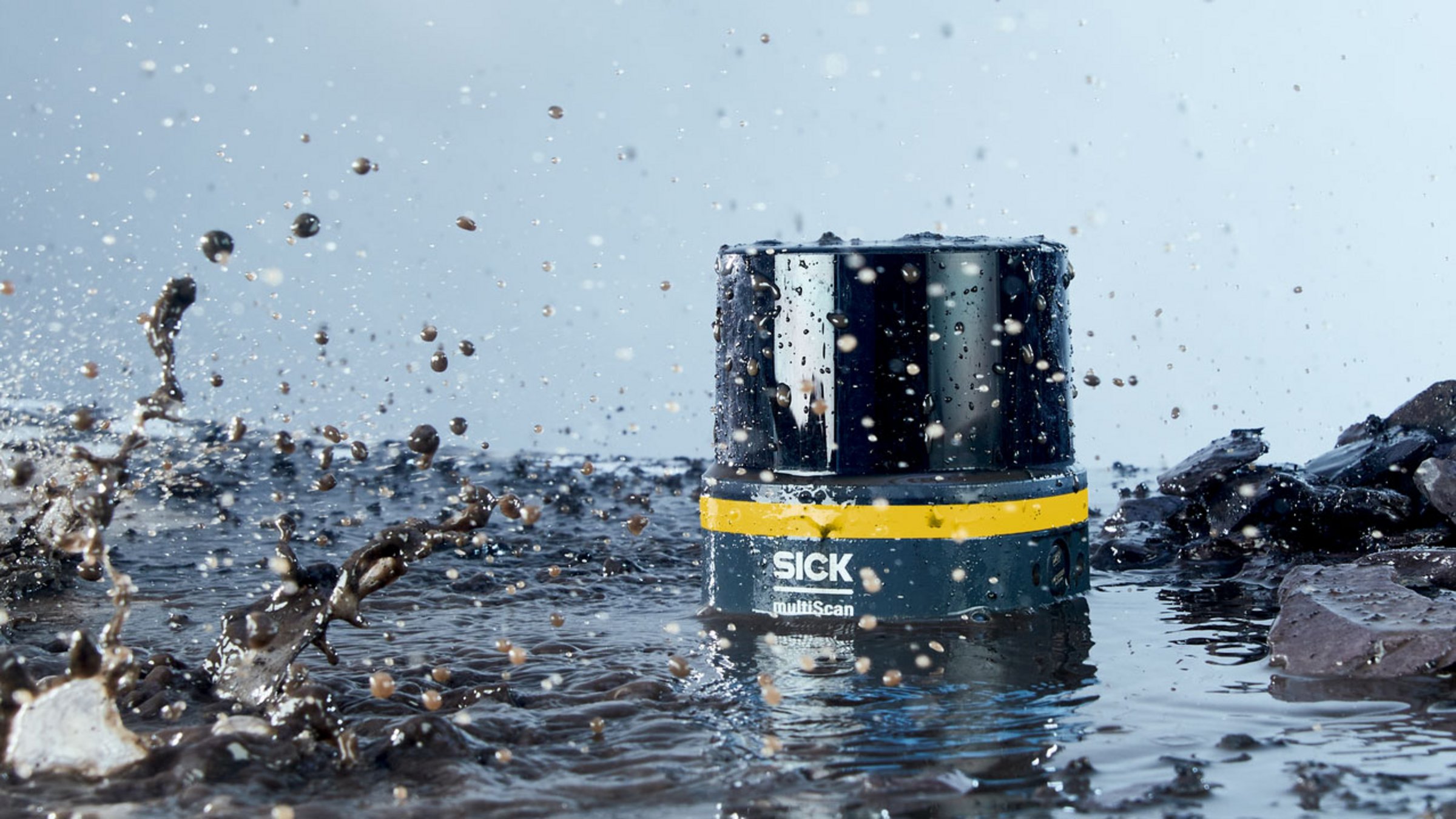
With the multiScan100-S, Sick is introducing its first 3D LiDAR sensor that integrates the mapping of a mobile machine’s surroundings, the detection of potential obstacles or people at risk in the vicinity, and the provision of the appropriate safety function for the situation into a single, complete system. This combination of hardware and software performance makes the multiScan100-S a true all-rounder. The robust measurement technology and the IP69K-rated housing ensure high availability in harsh environments, such as those commonly found in the agricultural and construction sectors. The 3D LiDAR sensor is certified in accordance with ISO 13849-1 and IEC/TS 62998-1 for safety-critical outdoor use and operates very reliably even in environments with poor lighting conditions or high levels of dirt and dust.
The Sick multiScan100-S therefore represents a significant innovation, both in terms of machine safety and the further processing of the sensor data collected, particularly with a view to the future autonomous operation of mobile machinery in the agricultural and construction sectors.
SICK AG
Visionary AI Assistant
Hall 17 | Stand B21
Subject Area 06 | Vehicle Electronics
Stereo cameras have been used for some time now in environmental perception and the control of mobile machines. The 3D images captured can also be used for obstacle detection and collision avoidance; however, the development and integration of suitable evaluation algorithms remains a challenging task, particularly for OEMs.
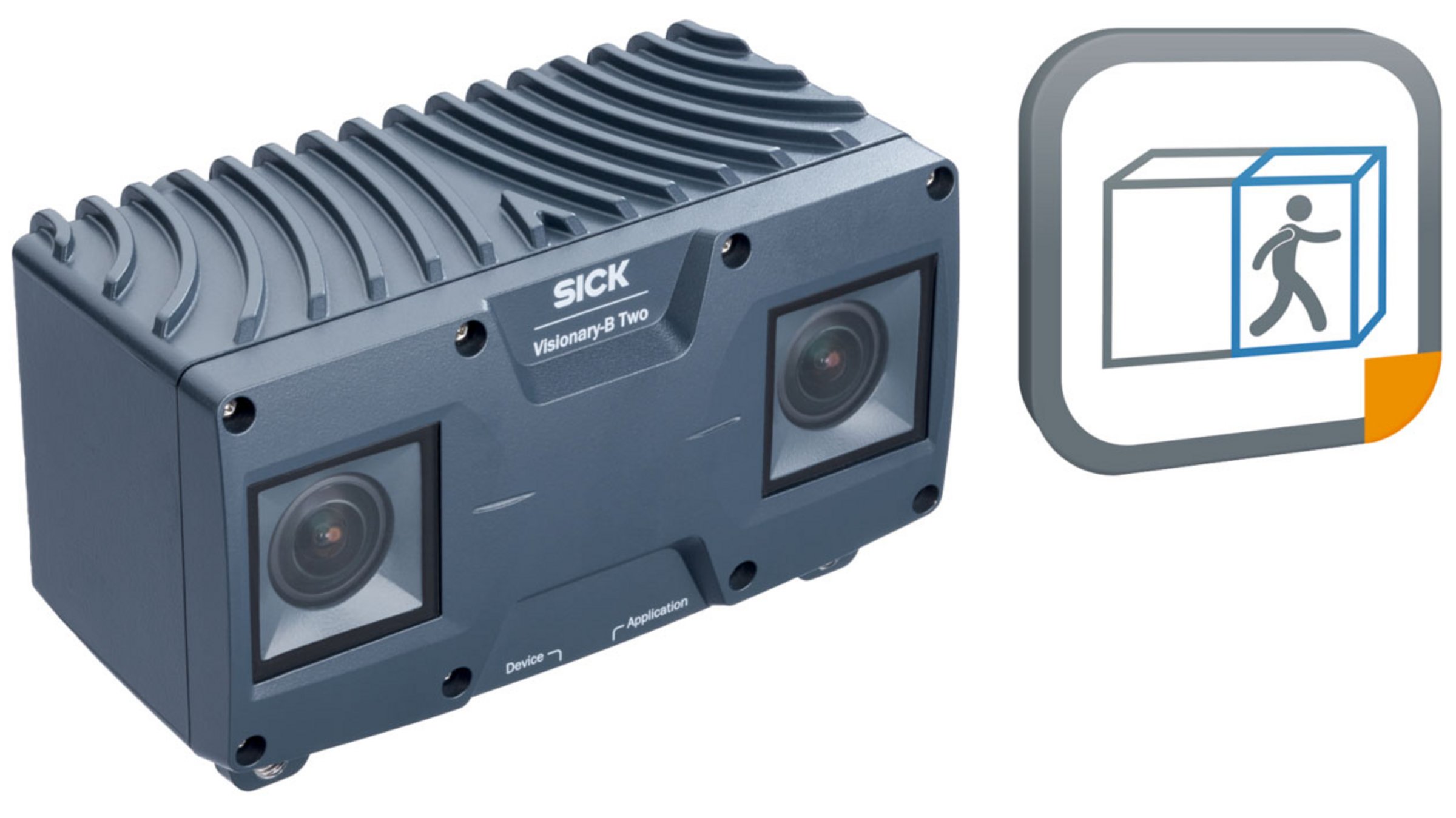
With the Visionary AI-Assist, Sick is introducing, for the first time, a robust, 3D camera-based solution for safe collision avoidance in mobile machinery. AI integrated into the camera system detects obstacles in the environment and determines the distance to each object. As even untrained objects are reliably detected, false alarms are rare. This reduces the workload on the operator and enhances both safety and productivity. Thanks to the modular edge computing design, no external processing hardware is required, thereby reducing system costs and complexity. A customisable field of view, various interfaces for seamless integration into the system architecture and a robust design for tough outdoor agricultural applications offer OEMs significant benefits, whilst the option of a live video stream supports the operator, thereby enabling more sustainable and energy-efficient field operations.
The Visionary AI-Assist provides a groundbreaking technology for 3D image-based environmental recognition, which significantly enhances the capabilities and safety of mobile machinery in agriculture.
STW – Sensor-Technik Wiedemann GmbH
Safety Assist
Hall 17 | Stand D12
Subject Area 06 | Vehicle Electronics
In cooperation with driveblocks GmbH
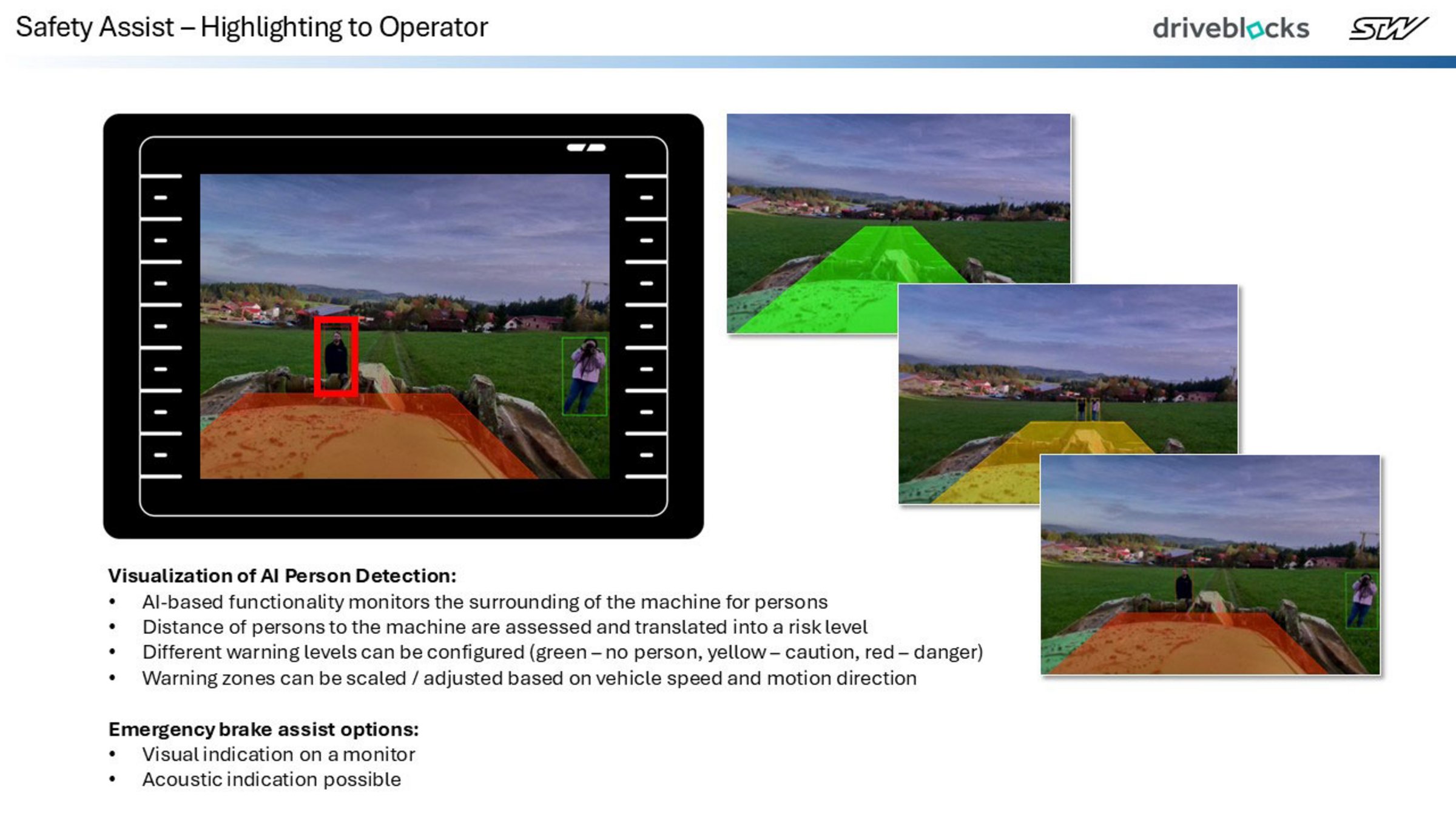
Blind spots around agricultural machinery pose a particular danger to people and animals because they cannot be seen by the operator. Surround-view systems with multiple cameras can significantly reduce these blind spots, thereby ensuring greater safety.
With Safety Assist, STW – Sensor-Technik Wiedemann is now, for the first time, providing a solution for software-defined vehicles – that is, primarily electronically controlled and therefore software-defined vehicles in the agricultural sector. The system offers an adaptable all-round view with person detection and allows switching to plug-and-play cameras for a combination of environmental and process monitoring. Furthermore, it enables automatic machine parameterisation based on the attachment used and dynamically positioned cameras. Safety Assist’s innovation stems from the combination of functions that were previously independent of one another in state-of-the-art technology, thereby significantly reducing the development, manufacture, maintenance and testing of electrical and electronic components and systems. In addition to safety functions such as person detection, the system can be used to automate driving functions, simplify machine operation, and develop and implement additional assistance functions.
Safety Assist thus integrates, for the first time, a wide variety of sensor-based and other ECU functions comprehensively and in a safety-oriented manner into a complete system, whilst combining this with the ability to support and update the AI online throughout the machine’s entire life cycle.
ZF Group
ZF eTD
Hall 15 | Stand C06
Subject area 07 | Drivetrain technologies
In current electric tractors, the internal combustion engine has generally been replaced by an electric motor with a reduction gearbox, without altering the familiar and tried-and-tested hydrostatic power-split CVT drivetrain.
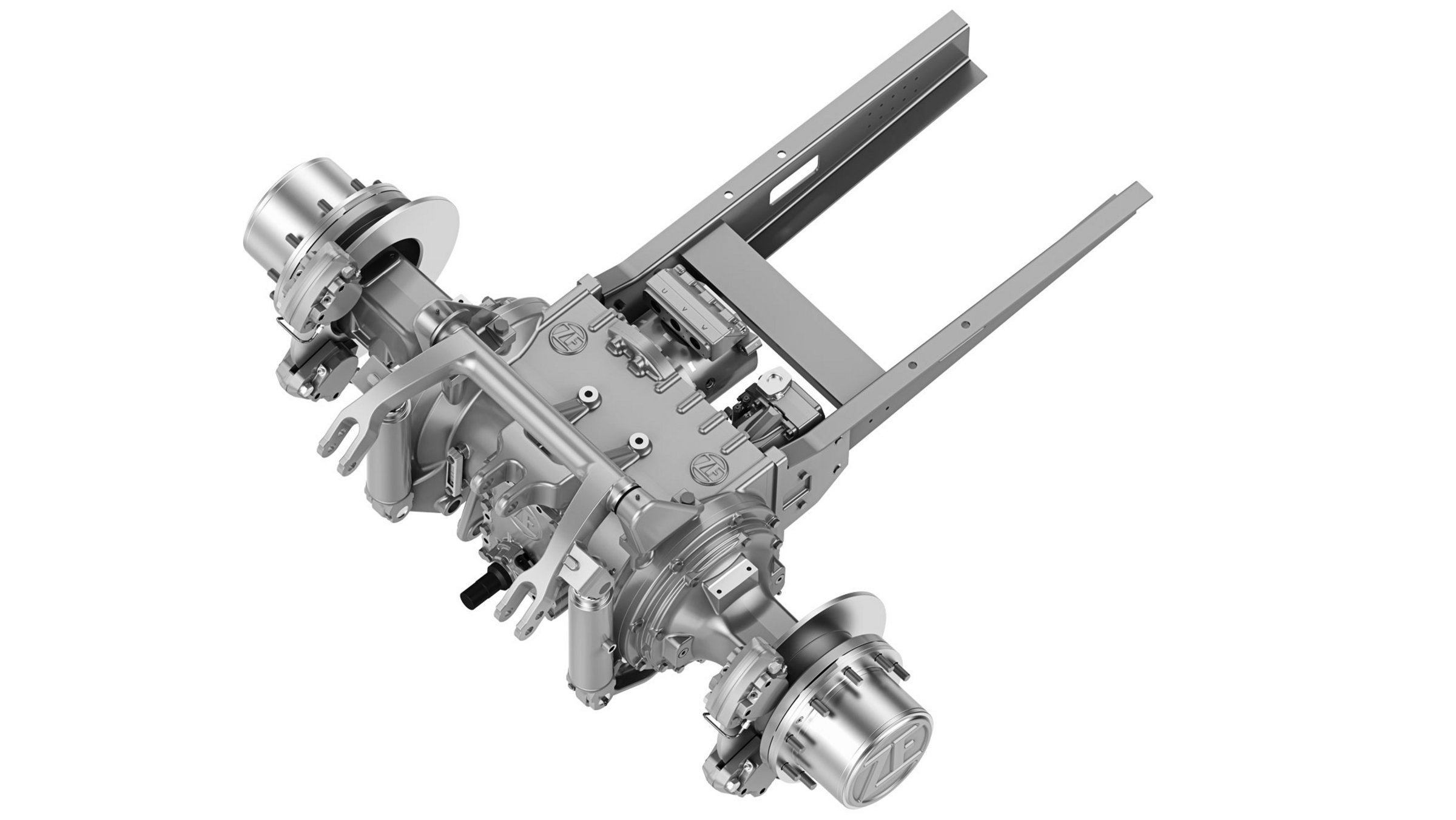
The electric TerraDrive (eTD) from ZF Friedrichshafen takes a different, completely new approach: the modular, highly integrated electric axle system combines traction, PTO and hydraulics in a compact design for tractors up to 100 kW. This not only enables emission-free operation without any loss of power, but also means that central gearboxes, hydrostatic units, clutches and hydraulic systems can be partially eliminated or replaced by a dual electric drivetrain with energy recovery and an optimised design for maximum efficiency and flexibility during installation. At the heart of the eTD lies a highly integrated electric drive unit with two oil-cooled electric motors – one for the main drive, the other for auxiliary drives. The change in the basic design concept creates space for batteries or hydrogen tanks, which can significantly increase range and operating time. The SYSTEMS & COMPONENTS Trophy jury points out that this applies not only to traditional tractor applications but, above all, can be extended to other machinery.
The eTD thus represents a scalable, future-proof solution for emission-free agriculture without compromising on performance or functionality.